See the Winners of the 2026 Elev8 Design Awards
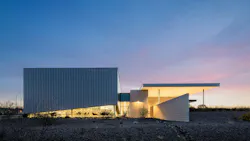
From a public library that embraces its desert landscape to a LEED Platinum-targeted research facility, the 2026 honorees in BUILDINGS and BD+C’s annual Elev8 Design Awards represent true excellence in building design and performance.
The Elev8 honorees span new construction and major renovation projects, and they all have one thing in common—they’re raising the bar for design innovation, sustainability, social impact, and long-term performance. The eight judges—a jury of AEC professionals—evaluated the project submissions against key criteria ranging from aesthetics and innovation in design to technology integration, social impact, and more. A sincere thank you goes out to the whole panel:
- Taylor M. Gawthorp-Cruse – senior associate, project executive, IMEG
- Krystyn Haecker – partner, Mirador Group, Vedetta Design
- Garrett Herbst – senior associate, Little
- Maria Antony Katticaran – project manager, HDR
- Samantha Markham – North Texas K12 Market Leader, Principal, Stantec Architecture
- Benjamen Metz – principal, ESa
- Jennifer Rittler – associate principal, project architect, Moody Nolan
- Yafei Zhang – associate principal, KPF
Below, you’ll find the 10 projects selected for Jury Citations, as well as 10 Honorable Mentions selected for their merits across the Elev8 design criteria. Check out the full feature in our Second Quarter 2026 issue to learn more about them.
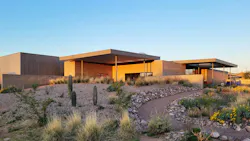
Grand Award: New Construction – Sahuarita Regional Library
Over the last decade, the town of Sahuarita, Arizona, has experienced rapid population growth while lacking access to a modern, full-service library. The former library no longer met the needs of this expanding community. This new 17,000-square-foot facility provides the amenities of a modern library, including collection areas for children, teens, and adults, as well as study and meeting rooms, a maker space, a gaming center, and a business development area. Its design embraces the desert landscape, with building mass and orientation that respond to solar exposure, prevailing winds, and pedestrian movement across the site. A continuous low-ribbon window frames earth berms and bioswales planted with native vegetation and irrigated using harvested rainwater.

Grand Award: Reconstruction – L’Oreal North American Research & Innovation Center
L’Oreal Groupe has long believed that beauty is not a luxury, but a powerful force shaped by science, culture, and human connection. This commitment comes to life in its new 257,185-square-foot research facility in Clark, New Jersey—the company’s largest research facility outside France. Developed through the renovation of an existing structure and the addition of a state-of-the-art expansion on a reclaimed brownfield, the campus unites 600 experts and scientists under one roof. Designed for wellness, inclusion, and sustainability, the LEED Platinum-targeted site features solar energy, low-carbon materials, and restored landscapes. The workplace itself reimagines the modern office with a variety of seating types, huddle rooms, quiet spaces, and project zones, as well as wellness rooms, mother’s rooms, and abundant access to daylight.
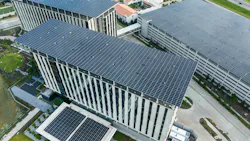
Gold Award: Commercial – Wells Fargo Corporate Campus
The largest net-positive campus ever built in the U.S., Wells Fargo’s new corporate campus sets a benchmark for sustainable workplace design. The 850,000-square-foot LEED Platinum campus generates more energy than it consumes while delivering a highly connected, human-centered employee experience. The 22-acre site features two 10-story buildings situated around walkways and green space. Achieving net-positive performance in the demanding Irving, Texas, climate was no simple feat; Corgan’s sustainability practice developed high-impact strategies to minimize the campus’s carbon footprint nd reduce energy and water consumption, including 360,000 square feet of solar panels. Corgan also worked with Wells Fargo to optimize when and how the buildings operate, including consolidating 24/7 teams on a single floor to minimize energy usage.
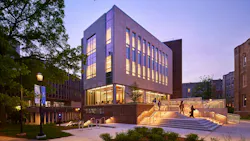
Gold Award: Institutional – Lehman College, Nursing Education, Research & Practice Center
This nursing center in the Bronx was developed to expand instructional and hands-on lab space to meet the growing need for healthcare workers in underserved communities. The healthcare sector is also the borough’s largest employer. As the only public college in the Bronx to offer bachelor’s and graduate degrees in nursing, this new school is poised to contribute to the pipeline of skilled nursing professionals who live and work in the area. The 52,000-square-foot facility, situated in a new five-story building along the Jerome Park Reservoir in the Kingsbridge Heights area, offers hands-on training through a series of classrooms, simulation labs, student lounges, and faculty offices. Programmable, computerized patient simulators and a 20-bed nursing skills and physical assessment lab offer a fully immersive training experience in a realistic, busy, hospital-like setting so students can respond to a variety of incidents.
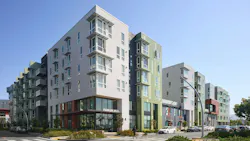
Gold Award: Multifamily – Foon Lok East & West
Overlooking the Brooklyn Basin waterfront, Foon Lok is a two-phase affordable housing community that provides much-needed housing in Oakland, California. Named for the Cantonese words for “joyous community,” Foon Lok is designed to foster a connected, sustainable, and supportive environment for residents. The community serves low-income families and formerly unhoused individuals. Phase one, Foon Lok West, is a six-story, LEED Gold-certified building with 130 affordable family apartments, structured parking, offices, community and laundry spaces, bicycle parking, and resident services. Foon Lok East is structurally connected to Foon Lok West at the podium level and is organized around a landscaped central courtyard linking the two L-shaped buildings.
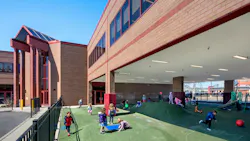
Gold Award: Civic/Public – Barbara Vick Western Branch
This project transformed a commercial bank building in Chicago’s Beverly neighborhood into an early education center. The design embraces the building’s unique features to create vibrant, airy classrooms and public areas supporting a play-based curriculum. Upon entry, energetic blues, oranges, and yellows blend with the warm wood tones of a sculptural stairway illuminated by a large glass atrium; the colors zigzag into six generously sized classrooms. To bring students outdoors, the teller drive-through was converted into a covered play environment. This facility illustrates how neighborhoods can turn empty storefronts into community assets.
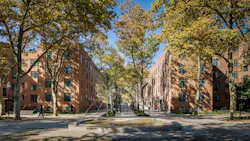
Silver Award: Multifamily – Harlem River Houses
This comprehensive rehabilitation creates a sustainable future for the landmarked Harlem River Houses, New York City’s first purpose-built public housing development. The project was originally completed in 1937 as part of the New Deal to provide quality homes for working-class African-Americans. The historic Modernist design groups seven red-brick buildings around large courtyards with wide Belgian-block walkways and sunken playgrounds. The design preserves or recreates character-defining historic features, while interior modernizations bring new finishes, fixtures, appliances, lighting, and high-efficiency domestic hot water and HVAC systems to all 577 residential units.
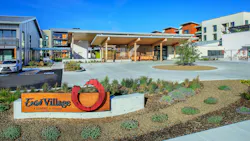
Bronze Award: Multifamily – Enso Village
Enso Village in Healdsburg, California, is a life plan community created from a unique partnership between the San Francisco Zen Center and Kendal Corporation, a not-for-profit senior living provider with Quaker roots. The community is located on a 16-acre campus set in the heart of Sonoma’s wine country. The property is sited to take advantage of its pastoral environment surrounded by gently sloping hills, vineyards, and woodlands, with 2 miles of tranquil walking paths connecting indoor and outdoor spaces. The community includes 221 independent living, 30 assisted living, and 24 memory care residences, as well as common areas for a total of 480,000 square feet—all designed to support aging in place with access to higher levels of care as residents’ needs evolve.
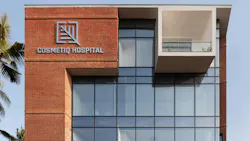
Outstanding Design: Public Spaces – Cosmetiq Hospital
Cosmetiq Hospital is a specialty aesthetic plastic surgery hospital located in Thiruvananthapuram (Trivandrum), Kerala, India. Built on a compact, the facility was envisioned by a plastic surgeon client who sought a building that would reflect the nature of aesthetic medicine itself—a place associated not with illness, but with transformation, confidence, and wellbeing. The building remains calm, welcoming, and visually refined while accommodating a technologically advanced, service-heavy medical program. Functions are vertically organized, with public and consultation spaces on lower floors, procedure and recovery zones in the middle, fully equipped operation theatres above, and administrative offices at the top. The vertical clarity allows the hospital to operate efficiently despite spatial constraints.
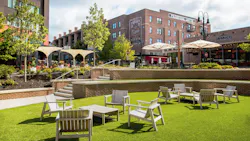
Outstanding Design: Placemaking – Town at Trilith
Town at Trilith brings the spirit of urban living to rural Georgia. Built on 235 acres, this mixed-use community in Fayetteville thrives on creativity, collaboration, and a scale that feels personal and connected. It proves that walkable, vibrant neighborhoods can succeed far beyond the city limits. The design team worked through complex challenges to deliver a place that balances sustainability, efficiency, and community, all while navigating budgets, stakeholder input, and pandemic-era constraints. Town at Trilith features seven distinct building expressions that use warm brick masonry, natural wood, metal accents, and stepped massing to harmonize industrial and agricultural vernaculars. Streets, plazas, and open spaces are designed for accessibility, wellness, and walkability.

Honorable Mention: Retail/Showroom – Patel Brothers Specialty Market
Patel Brothers is a full interior and exterior transformation designed to elevate the specialty grocery experience while celebrating cultural identity, functionality, and community connection. The exterior design establishes a strong, recognizable presence within the surrounding commercial context, balancing brand identity with a clean, contemporary architectural language. Inside, the design prioritizes clarity, efficiency, and customer flow within a large-format specialty retail environment. The layout supports intuitive circulation, clear sightlines, and seamless transitions between departments. Operational efficiency was also a key design driver.
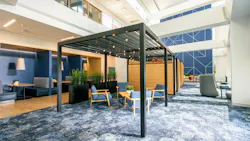
Honorable Mention: Commercial – Office Hub for Fortune 500 Company
This renovation is a model example for turning the “bones” of a legacy corporate structure into a modern, performance-driven flagship that supports collaboration, wellbeing, and a hybrid work model. By navigating the rigid constraints of a 30-year-old building, the team successfully balanced stringent LEED requirements with a unique, branded aesthetic. The client’s goal to achieve LEED certification within the constraints of the existing structure was a primary driver of the project; the depth of the floor plates and limited window openings restricted access to daylight-related credits, requiring the team to strategically maximize points within their control. This goal guided decisions around materials, lighting controls, mechanical systems, and acoustics, ultimately resulting in the project achieving LEED Certified status.
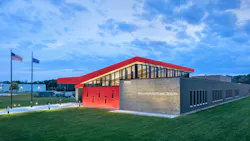
Honorable Mention: Civic/Public – Wisconsin National Guard Readiness Center
Honoring the history and pride of the Red Arrow Brigade through emblematic color, historic exhibits, graphic murals, and sustainable materials, the addition to and renovation of the Appleton Wisconsin Army National Guard Readiness Center carries the values of honor, integrity, and duty by creating a welcoming and collaborative environment that supports mission success, recruitment, and retention. The addition wraps three sides of the existing facility and features a cantilevered red roof to mimic the iconic Red Arrow. Clerestory windows reveal timber accents, reflecting the original drill hall’s construction. In-floor exhibits, history-focused murals, back-lit graphic perforated panels, and red arrow imagery throughout enliven, educate, and lead active National Guard personnel, recruits, and visitors through the soaring spaces.
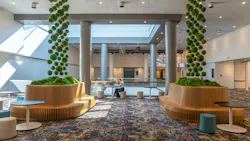
Honorable Mention: Civic/Public – Ernest N. Morial Convention Center
Despite their prime locations, convention centers often operate as self-contained environments with limited connection to their surrounding cultural ecosystems. With the opportunity to redefine nearly 1 million contiguous square feet of New Orleans’ Ernest N. Morial Convention Center, this project team understood the space needed to be in conversation with the city rather than operating as a neutral backdrop for tourism. The team modernized meeting rooms, corridors, public gathering spaces, and pre-function areas while embedding the experience of New Orleans through art, lighting, texture, food, rhythm, movement, and visitor interactions. The design draws on local patterns, urban archetypes, and the natural forces of the Mississippi River that shaped the city’s grid. This project also included more than 4,000 LED fixture replacements, 40 miles of new wiring, upgraded HVAC systems, stormwater enhancements, and 60 water bottle filling stations.
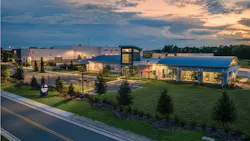
Honorable Mention: Institutional – Tavares Public Works Operations Center
This operations center is a pioneering regional workforce training campus developed through a partnership between the City of Tavares, Florida, and Lake Technical College. The project integrates active municipal operations with hands-on vocational training; it consolidates the city’s public works operations while serving as the regional training center for Lake Technical College’s Automotive and Diesel programs. Students work alongside city technicians and gain practical experience. The municipal-airport-themed project includes an 8,500-square-foot administration building, 26,750 square feet of shared training space, and an 8,704-square-foot operations building.
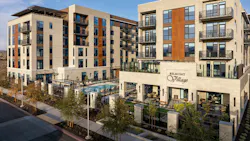
Honorable Mention: Senior Living – Belmont Village San Ramon
The Belmont Village Life Plan community in San Ramon, California, is a thoughtfully integrated senior living development created in partnership with the site’s master developer. The project is coordinated with a planned multifamily residential development and a public park, allowing for an efficient shared-use approach. Belmont Village provides only four on-site parking spaces while utilizing 130 additional spaces through a shared parking agreement with an adjacent office building to the south. This six-story community includes 177 independent living, assisted living, and memory care units, as well as Belmont Village’s Circle of Friends program for seniors with mild to moderate cognitive decline. A central courtyard features a pool and amenities; the southern wing of the building is shifted eastward to open the southwest corner of the courtyard, increasing sunlight and views.
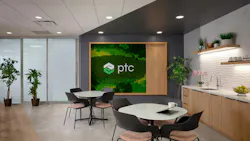
Honorable Mention: Commercial – Technology Company Offices
This project in San Ramon, California, comprised an 11,000-square-foot renovation for a technology company within an existing four-story Class A office building. In its original condition, the suite lacked a clear identity and attention to detail that the tenant desired. Banducci Associates Architects collaborated with the tenant to reimagine the workplace as a physical expression of the company’s character, values, and inventive spirit. The design focused on fostering an inviting environment that encouraged employees to return to the office and engage with their coworkers following a period of remote work. A HUB space serves as a greeting, gathering, and sharing area. The design also features warm walnut architectural built-ins, curated lighting, a real moss wall, biophilic design, and a variety of collaboration zones.
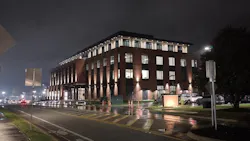
Honorable Mention: Civic/Public – Columbia County Building A
This four-story municipal building in Evans, Georgia, houses administrative services and county council chambers for Columbia County. The surrounding campus received a renovation with a new park plaza on the site of the previous, demolished building. The facility required a commanding presence, as construction phasing demanded it be placed close to the road. It’s designed around a “concierge” model, with visitors immediately brought to a service desk upon entry, and destinations for regular public services all able to be gestured to for guidance in a two-story, open entry lobby.
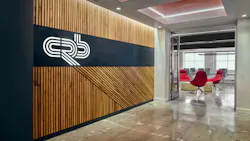
Honorable Mention: Commercial – CRB Emeryville Offices
This project in Emeryville, California, consisted of a 15,710-square-foot full-floor renovation within an existing high-rise building for an engineering, architecture, construction, and consulting firm. The existing space offered expansive views of the Bay, San Francisco, and the Berkeley Hills beyond, but it was previously subdivided into multiple tenant spaces, which didn’t meet the tenant’s needs. The design approach involved removing most existing conditions and creating a cohesive, open environment that integrates gathering areas, open workspaces, and collaborative design zones. The elevator lobby makes a strong first impression with a palette of wood slats and blackened steel that establish a bold identity aligned with the tenant’s brand.
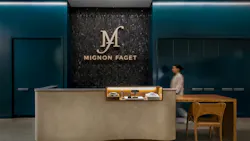
Honorable Mention: Retail/Showroom – Mignon Faget Flagship Store
This project began with a fundamental question: How can the retail environment encourage participation? It approaches retail as a spatial conversation rather than treating the space as a container for product, creating an environment that allows its values to surface naturally through experience. Located within the Lakeside Shopping Center in Metairie, Louisiana, the 2,300-square-foot space featured familiar constraints of fixed structural bays, limited natural light, and predetermined storefront conditions. The project included a full reconfiguration of the interior layout and back-of-house spaces. Custom, eye-level display cases encourage interaction and allow flexibility across collections, while clear sightlines and an open floor plan improve circulation and visibility throughout the store. Back-of-house functions (offices, storage, and staff amenities) were expanded and reorganized to support daily operations.
Learn more about these exciting projects in our Second Quarter 2026 issue!