From Preventive to Predictive: How Data-Driven Maintenance Is Reshaping HVAC Capital Planning
Key Highlights
- Predictive maintenance uses real-time data and diagnostics to identify emerging issues before failures occur, reducing costly unplanned downtime.
- Standardized workflows and structured asset intelligence improve decision-making, minimize skill gaps, and ensure consistent maintenance outcomes.
- Advanced diagnostics like ultrasonic analysis detect hidden mechanical issues, enabling targeted interventions and avoiding premature replacements.
- Efficiency improvements, such as advanced lubricants, help mitigate heat transfer losses, extend equipment life, and lower energy consumption.
- Lifecycle intelligence supports strategic capital planning, shifting focus from reactive repairs to proactive investments that enhance sustainability and operational resilience.
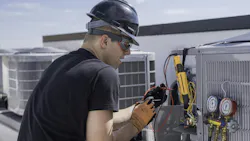
Preventive HVAC maintenance usually follows a familiar rhythm. Equipment is inspected on a schedule, filters are changed, belts are adjusted, and repairs are performed when components fail. This model has helped reduce emergency calls, but it has not solved one of the most persistent challenges facing facility owners: unplanned capital expenditures.
Unexpected compressor failures, premature equipment replacements, and unplanned downtime continue to disrupt operating budgets across commercial portfolios. Since 2020, HVAC equipment prices have surged due to rising raw material costs, supply chain disruptions, regulatory changes, and labor shortages. Some equipment categories have even seen price increases averaging nearly 40%, with certain components nearly doubling in cost as manufacturers adapt to refrigerant phaseouts and new low-GWP requirements. In this environment, unplanned replacement is no longer just inconvenient; it can be financially destabilizing.
As buildings grow more complex, energy costs continue to rise and sustainability expectations tighten, the limitations of traditional maintenance have become harder to ignore. These factors have caused the industry to undergo a structural shift from time-based maintenance toward predictive, lifecycle-driven strategies that prioritize visibility, verification, and long-term performance over reactive repair.
The Cost of Not Knowing
Most unexpected capital expenditures are rarely the result of a single catastrophic event. More often, they stem from compounding issues that go undetected for years: declining heat-transfer efficiency, oil fouling inside coils, vibration anomalies, or subtle changes in sound signatures that indicate mechanical stress long before failure.
In traditional service models, these signals are easy to miss. Inspections vary by technician experience. Documentation is inconsistent. Equipment histories are fragmented across spreadsheets, service tickets and memory. This leads to decisions about repair versus replacement being made frequently with incomplete data.
Systems run harder to compensate for inefficiencies, energy consumption rises, components wear out faster, and failures occur with little warning. Over time, organizations are pushed into a reactive maintenance cycle where capital planning becomes defensive rather than strategic.
Preventive Maintenance Is No Longer Sufficient
Preventive maintenance remains essential. Regular inspections, cleaning, and basic servicing help keep systems operational and code-compliant. But preventive maintenance alone does not explain why performance is declining, how quickly degradation is occurring, or when intervention will meaningfully improve outcomes.
Predictive maintenance fills that gap.
Rather than relying solely on calendar intervals, predictive strategies use condition-based intelligence to assess asset health in real time. They capture structured data at the unit level, identify emerging risks and quantify performance trends throughout the equipment life cycle. This transforms maintenance from a recurring expense into a planning tool, one that supports informed capital decisions and risk management.
The economic implications are significant. Research shows that the median cost of unplanned downtime for HVAC equipment across industries is $125,000 per hour, with some facilities experiencing multiple critical outages in a single year. In contrast, 95% of organizations that have adopted predictive maintenance report a positive return on investment and more than a quarter recoup their investment in less than one year.
The Power of Lifecycle Intelligence
At the core of predictive maintenance is data integrity. When technicians collect standardized information, visual verification, operational metrics, diagnostic readings, and historical comparisons, each unit begins to tell a coherent story.
Structured asset intelligence creates a living record of system condition. It allows service teams and facility managers to see not only what was done but also how performance is changing over time. This visibility reduces subjectivity in the field and enables consistent evaluations regardless of technician experience level.
More importantly, it allows organizations to plan capital expenditures based on evidence rather than assumptions. Equipment nearing the end of its useful life can be identified early. Assets with recoverable performance can be preserved. Budgets can shift from emergency replacements to intentional reinvestment.
Diagnostics That Go Beyond the Surface
Advanced diagnostics are critical for this evolution because traditional inspections often focus on visible wear or immediate faults. Predictive diagnostics, by contrast, listen, measure, and analyze.
Ultrasonic and acoustic analysis can detect abnormalities in compressors and other mechanical components that are not visible during routine checks. These tools can identify friction, imbalance, and stress signatures long before they fail. When combined with trend data, advanced diagnostics help distinguish between assets that are failing and those that are simply underperforming.
This distinction matters. Replacing equipment prematurely puts unnecessary pressure on facility budgets, but allowing failing equipment to run unchecked can mean catastrophic loss. But predictive diagnostics enable a third option: targeted intervention.
Permanent Efficiency Improvements as Risk Mitigation
Efficiency degradation is one of the most overlooked drivers of unplanned capital expenditures. As systems lose heat-transfer efficiency, they compensate by operating longer and harder, accelerating mechanical wear and increasing energy consumption.
A key contributor to this degradation is oil fouling. Over time, oil breaks down and builds up on the interior surfaces of heat-exchanger coils, forming an insulating layer. Instead of returning to the compressor sump, the oil adheres to the coil tubing, impairing heat transfer and forcing the system to work harder, thus consuming more energy.
In the past, solutions such as mechanical cleaning or short-term chemical treatments were temporary or simply ineffective. Fortunately, new technologies have been introduced to the market that address efficiency losses at the molecular or material level. Advanced lubricant technologies, validated by independent studies, enhance heat transfer, reduce friction and stabilize operating conditions for the remaining life of the equipment. These solutions have demonstrated recurring operational savings of up to 20%, rapid payback periods, measurable improvements in long-term system performance and extended equipment life.
When efficiency improvements are verified through data and diagnostics, they become a form of risk mitigation. Predictable performance simplifies planning, allowing capital expenditures to be deferred without compromising reliability.
Standardization Reduces Risk and the Skills Gap
Another advantage of predictive, program-based maintenance is standardization. When workflows, diagnostics, and documentation are unified, outcomes become less dependent on individual technicians and more dependent on process.
This consistency helps service providers deploy mixed-experience teams more effectively, addressing the skilled trades gap without sacrificing quality. Visual verification, guided diagnostics, and structured reporting ensure that critical insights are captured every time.
For facility owners, this means fewer blind spots and greater confidence in service recommendations. For service teams, it means higher productivity and clearer accountability.
Sustainability as an Operational Outcome
Sustainability is often framed as a compliance requirement or public commitment. In predictive maintenance models, it becomes an operational outcome.
Reducing unnecessary truck rolls through remote evaluation lowers emissions. Improving system efficiency reduces energy consumption. Extending asset life minimizes material waste and embodied carbon associated with premature replacement.
These benefits are not achieved through isolated actions, but through integrated systems that align diagnostics, data and performance improvements within a lifecycle strategy.
A Smarter Path Forward
The HVAC maintenance market reflects this shift. According to a recent report, the global HVAC services market was valued at approximately $92.8 billion in 2024 and is projected to reach $146.5 billion by 2032, growing at a compound annual rate of nearly 6%. Growth is driven not just by more buildings, but also by demand for smarter, data-driven maintenance models that reduce risk and improve predictability.
Predictive maintenance is not about predicting failure for its own sake. It is about enabling better decisions that reduce unexpected capital expenditures, protect operating budgets, and extend the value of existing assets. By integrating structured asset intelligence, advanced diagnostics, and permanent efficiency improvements into standardized service programs, the industry can move beyond reactive repair towards proactive capital planning.
In an environment where every dollar and every decision matters, knowing more and acting earlier may be the most valuable maintenance strategy of all.
About the Author
Rick Dowdy
Rick Dowdy is senior vice president of HVAC services and training at ECM Technologies with more than 20 years of industry experience. A NATE-certified professional and proctor, he specializes in technician development and performance-driven service programs. His work focuses on helping HVAC organizations grow through education, consistency and field excellence.