Smart Modernization: How Emporia State University Aligned Energy Improvements to its Mission
Key Highlights
- The university replaced outdated equipment with a smart ecosystem that controls HVAC, lighting, and security systems for improved efficiency and safety.
- A pilot project identified $36,000 in electricity savings over six months, leading to campuswide energy conservation actions.
- Upgrades included new chillers, advanced building automation systems, LED lighting retrofit, and building envelope improvements.
- Real-time performance data now guides maintenance and operational decisions, reducing downtime and extending equipment lifespan.
- The modernization aligns with the university’s strategic plan to create effective learning environments and maximize resource utilization.
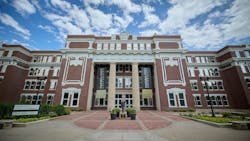
Public buildings often come with unique considerations around being mindful stewards of public funds, and how that may influence building upkeep. When Emporia State University, a public school in Kansas with buildings averaging 50 years old, was evaluating infrastructure modernization, leadership wanted to ensure this effort aligned with the university’s mission.
Like many higher education institutions in the late 2010s, Emporia State University was facing the one-two punch of declining enrollment and rising upkeep costs. As its deferred maintenance backlog grew, the status quo wasn’t working.
“With old infrastructure and missing information, it’s so difficult to operate the systems under the regular standards,” explains Peter Hauff, Emporia State University’s director of facility planning with University Facilities-Physical Plant/Utilities. “We couldn’t find parts to repair equipment, some of the manufacturers were out of business. The challenge is to keep the facilities operating under those conditions.”
In wanting to become more efficient—in both machine and manpower—and aligning with Emporia State’s mission of “preparing students for lifelong learning, rewarding careers, and adaptive leadership,” infrastructure changes were necessary.
From Pilot Project to Campuswide Energy Conservation
Improvements were evaluated through the lens of the university’s “Adaptive University Strategic Plan 2015-2025,” the document that identifies and coordinates strategies designed to create effective student learning environments, maximize resource utilization, and advance the institution. The facilities team quickly discovered that updated equipment alone would not be enough; Emporia State University needs a smart ecosystem that could learn and adapt, providing maximum value.
Information was a priority when choosing updates, as Hauff notes that “a process that isn’t measured cannot be improved.”
To maximize strategic alignment, the facility and finance departments worked together on shared goals and objectives, mapping facilities needs to university priorities, says Keven Ward, strategic programs consultant with Trane, who helped the university with their smart integration.
This engagement kicked off in 2022 with a Trane Intelligent Services pilot program, one that brings together data-driven, technology-enabled services that enhance building operations and management.
The pilot used existing data points throughout the campus to reveal the current state of existing equipment—reliability issues and opportunities for improvement. After realizing $36,000 in electricity savings over six months, Trane ran a campuswide audit that identified 20 recommended energy conservation actions, which Ward categorized as the following:
- Address risk mitigation of failed and/or failing major systems well past their ASHRAE expected service life
- Improve comfort, indoor air quality, safety, reliability and resiliency
- Optimize ongoing energy and operational efficiencies and maximize incentives and utility rebates
- Increase analytics to make the data generated by the energy monitoring and operational equipment actionable
Replacing End-of-Life Systems and Modifying Efficiency Settings
An outdated building management system was replaced with an ecosystem that could control campuswide needs such as HVAC system, floor plans, alarms, and cybersecurity, among other things. “We moved from a basic control system for one of the top control systems on the market,” Hauff notes.
Updates included:
- New and upgraded building automation systems
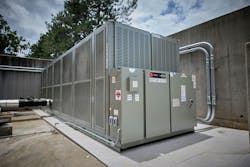
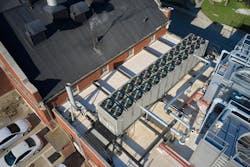
- A 410-ton chilled water plant with 12 thermal energy storage tanks, while removing the existing end-of-life, non-working 250-ton chiller
- Replacing a second end-of-life chiller with a new 230-ton chiller
- Updating and converting controls and switchgear
- Replacing and converting multiple air handling units
- Adding new control valves for fan coil units
- Replacing electrical equipment that was no longer supported
- Retrofit of existing lighting fixtures with tubular LED
- Various building envelope improvements (seals, window files, destratification fans, lab hoods, etc.)
- Modifying systems to run during more efficient times (for example, the central plant generates cooling capacity during off-peak hours for use during periods of peak demand)
In alignment with Emporia State University’s strategic plan, Trane emphasized the importance of data-driven, technology-enabled services that enhance building operations and management.
“Now, we have a very smart ecosystem that provides real-time performance insights, improves system and energy efficiency, and offers greater visibility and control over the buildings,” Ward says. He explains that adding or upgrading smart controls, sensors, and analytics is a quick and easy way to realize modernization benefits.
“It’s the first step almost every high‑performing facility takes on the path to long‑term modernization. Once this layer is in place, you can confidently plan mechanical upgrades, electrification, or decarbonization with real performance data, not guesswork.”
How to Evaluate Smart Building Projects
Facility directors, especially those managing public facilities or funds, should proactively consider priorities to be good stewards of public funds. Keven Ward, strategic programs consultant with Trane, offers these considerations to evaluate what to address first.
Prioritize Projects That Reduce Risk and Deliver Savings
Focus on the highest-risk, highest-waste systems first. Develop a ranked deferred maintenance plan based on cost, failure risk, and energy impact.
Capture All Available Funding and Incentives
Major opportunities include federal and state energy rebates, Inflation Reduction Act incentives, utility programs, decarbonization grants, and resilience funding. Many are first-come, first-serve or deadline-driven.
Leverage Funding Approaches Beyond Capital Budgets
Energy saving performance contracts, federal incentives, utility rebates, and grants combined with financing and budget-neutral modernization strategies enable upgrades without straining capital budgets.
Reduce Operational Waste Through Efficiency Improvements
Optimizing existing systems can yield substantial savings quickly. Controls tuning, retro-commissioning, high-ROI upgrades, and system benchmarking can pay back within one to three years.
Prepare for Regulations and Compliance Requirements
Building Performance Standards, emissions rules, and sustainability mandates are accelerating. Non-compliance can increase operating costs and limit funding eligibility.
Shift Focus from First Cost to Lifecycle Cost
Aging assets drive energy waste, risk of failure, and higher maintenance spend. Lifecycle cost modeling and multi-year capital planning help prioritize replacements and justify investments with data.
Use Data to Drive Decisions
Most institutions underutilize the data already generated by BAS/BMS systems. Partners should deliver clear KPIs, energy dashboards, and proactive analytics to guide improvements.
Modernize Through Cost-Reducing Electrification
Heat pumps, thermal storage, and energy-recovery systems can reduce operating costs while aligning with incentives and sustainability goals.
About the Author
 Valerie Dennis Craven
Valerie Dennis Craven
Content strategist and writer
Valerie Dennis Craven is an experienced writer of commercial and residential buildings and interiors, having previously served as Editorial Director for both BUILDINGS and i+s. Valerie enjoys writing about technology and how it impacts users in the built environment.