Oculus Hits a Home Run with Rawlings’ New Headquarters
Key Highlights
- The headquarters features a mix of private offices, open workstations, quiet zones, and collaborative spaces to support diverse work styles.
- Employee input shaped the design, leading to increased meeting rooms, better acoustics, and flexible environments that promote interaction and focus.
- Design elements like brick, leather, and metal details evoke the ballpark experience without literal stadium themes, reinforcing Rawlings' brand identity.
- Upgrades to building systems and exposed structural elements modernize the space while maintaining cost efficiency and sustainability.
- Amenities such as coffee bars and a central cafeteria foster informal gatherings, strengthening company culture and employee connection.
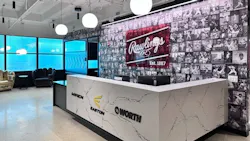
Sparked by a lease expiration, Rawlings Sporting Goods relocated from a dated, conventional office to three newly renovated floors of a 1970s-era, mixed-use tower in suburban St. Louis. The move gave the company an opportunity to reimagine its space as a ballpark-inspired headquarters designed around its people.
Partnering with architecture and interior design firm Oculus Inc., the baseball equipment supplier now operates in a workplace that combines collaboration, flexibility, and brand presence tied to its longstanding connection to the sport. The redesign elevates the employee experience by offering more choice and connection throughout the day.
Rather than a routine relocation, Rawlings used the move to reassess how its office supports employees. Leadership listened to teams across departments, who called for more ways to collaborate, greater flexibility in how and where they work, and an environment that reflects the pride of a 139-year-old brand.
To bring that vision to life, Rawlings worked with Oculus to transform three non-contiguous floors of the 12-story Gold Tower at Westport Plaza into a 37,000-square-foot, modern Class A headquarters for roughly 200 employees.
The result is a hybrid workplace inspired by the ballpark experience, blending infrastructure upgrades with employee-driven planning and everyday functionality. Located directly above the Rawlings Experience retail and brand destination, the headquarters reinforces Rawlings’ strong presence in St. Louis.
Game Plan Shaped by Employees
Oculus began the design process by gathering input through employee surveys and user group meetings.
“Leadership really wanted their employees to be heard,” explained Oculus senior interior designer Hannah Rohlfing. Employee representatives met regularly with the design team to refine priorities.
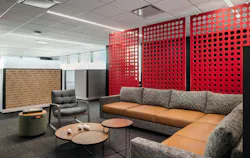
That feedback revealed challenges in Rawlings’ previous offices. Meeting rooms were scarce, informal collaboration was limited, and tall workstation panels restricted interaction. Employees wanted more variety in spaces including open areas for teamwork, quiet spaces for focused work, and enclosed rooms that could adapt throughout the day.
“Their existing workspace was very basic,” Rohlfing noted. “People weren’t excited to come to work. They wanted employees to really have a sense of pride coming into work.”
Rawlings Chief Marketing Officer Mike Thompson agreed. “When I think back to our prior buildings, they didn’t have a lot of personality,” he says. “They were cold and felt transactional.”
The new headquarters provides a broad mix of work settings including private offices, open workstations, focus booths, huddle spaces and conference rooms. According to Oculus senior interior designer Joanne Fields, the goal was to support both heads-down work and Rawlings’ highly collaborative, brand-driven culture, offering employees the “flexibility to bounce around in how they work.”
The headquarters also supports Rawlings’ hybrid work model while maintaining focus and collaboration. Acoustics and technology were critical factors.
“Acoustics were a big issue,” Fields said. “We added white noise, felt panels, and slightly higher partitions to help absorb sound, and made sure huddle and meeting rooms had the right technology so hybrid teams are all on the same platform.”
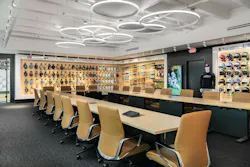
Meeting space was a top priority. In the previous office, teams were “always fighting to get in a conference room,” Thompson said. “There was never enough space.”
Today, the headquarters offers meeting rooms in multiple sizes, all equipped with audiovisual technology for hybrid work, allowing teams to “huddle up quickly and get things done,” Thompson added.
Reworking the Building—and the Brand
With its gold-tinted facade, the Gold Tower aligns naturally with Rawlings’ brand identity, particularly the company’s association with the Rawlings Gold Glove Award, a highly recognized honor in professional baseball. Despite being based in St. Louis for generations, Rawlings’ presence hasn’t always been widely recognized.
“We sort of have an identity crisis in that a lot of people don’t realize Rawlings is in St. Louis, and it’s been here since 1887,” explained Thompson. “We’re going to plant the flag in the ground and make sure everybody knows we’re here.”
The massive, 35,000-pound Gold Glove sculpture hoisted atop the tower does just that, turning the building into a highly visible brand landmark.
Inside, the design team faced the challenges of an aging structure. “There are some antiquated systems in the building,” explained Matt Bradley, co-director of commercial and retail markets at Oculus, pointing to outdated electrical, mechanical, and window systems.
A full building-wide replacement wasn’t feasible, so Oculus worked with engineering partners to develop an integrated approach. Bradley said they opted to “blend a new system into the antiquated, old system in a more affordable way,” reusing much of what was there while delivering a lower-energy, more maintainable setup.
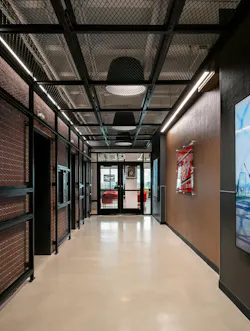
On the interior side, the team removed perimeter baseboard heaters to free up wall space for denser workstation layouts. Oculus also removed ceilings in key shared areas—including the elevator lobby and break room—to uncover the concrete waffle slab. “We exposed that structure to open it up,” Rohlfing noted.
As companies reassessed the role of the physical office post-COVID, Rawlings focused on the value of in-person collaboration. As Bradley put it, the design reflects “the importance of being together physically—in the same room, in the same space—to be collaborative and design-oriented.”
Ballpark Energy—Not a Theme Park
Rawlings and Oculus agreed the headquarters should reflect the company’s connection to baseball without becoming a literal stadium replica. “We wanted to be careful not to get too theme-y,” explained Rohlfing.
Instead, the design emphasizes materials and textures associated with the ballpark experience. Brick, exposed concrete, metal details drawn from stadium cages, warm wood tones, and leather appear throughout the office, with each material selected for authenticity. Leather, in particular, references Rawlings’ heritage as a glove maker.
After exiting the elevators, individuals are met with a leather-wrapped wall featuring a Rawlings patch, framed by a custom steel cage and brick tile, setting the tone for the workspace.
A lobby collage wall highlights Rawlings advisory players inducted into the Baseball Hall of Fame, including Mickey Mantle and Willie Mays. Elsewhere, dedicated product “war rooms” support the development of new gloves, bats, helmets, and catching gear. Monitors tuned to MLB Network and rotating images of professional and college players further connect daily work to the athletes and teams that rely on Rawlings products.
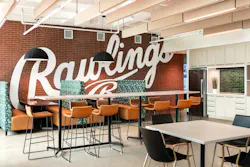
Amenities That Encourage Connection
To support efficiency across three non-contiguous floors, amenities were strategically placed to minimize movement between levels. Each floor includes a coffee bar with refrigeration and sink access, positioned as informal gathering spots. A larger café and break area serves as the central hub, while also functioning as a town hall for company-wide meetings and events.
For Rawlings, the most significant outcome has been cultural. Thompson compared the new headquarters with previous offices employees used primarily out of necessity.
“Our building now is something all employees are proud of,” he said. “They’re proud to show it off to their families and customers.”
By starting with employee needs, adapting a 1970s building, and drawing inspiration from its baseball culture, Rawlings has created more than just a new address. The headquarters provides a true home-field advantage.
About the Author
Liz Wolf
Liz Wolf is a Twin Cities, Minnesota-based freelance business writer specializing in commercial real estate.