The New Energy Resiliency and an Interview with President George W. Bush
At last month's World Energy Engineering Congress (WEEC) in Atlanta, much attention was focused on the recent hurricanes and their impact on power.
For decades, we have expected utilities to deliver power everywhere with high reliability. Nobody likes to lose the luxuries (lights, HVAC&R, communications, etc.) that electric power provides. In recent years, the term energy resiliency has been popular because it articulates the challenges that utilities face, especially as our world becomes even more dependent on electricity and internet-enabled devices.
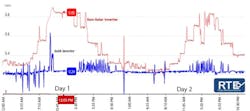
Energy resiliency also relates to the growth of renewable systems and their integration into our aging utility grids. This integration has created challenges for utilities to anticipate and to deliver consistent power to customers. For example, some renewable systems can be intermittent, such as when clouds pass over a solar system, requiring the utility to have standby or back-up power available. Increasingly unpredictable global weather has compounded the problem.
Fortunately, some systems today are getting more dynamic and more renewable energy is being pumped into the utility grid. In California during 2016, 13% of that state’s energy came from renewables – twice what it was just a few years ago. As the cost of renewables continues to drop, it is easy to see that this trend will continue.
The Links Between Energy Management, Energy Resiliency and Life Safety
For many cities, universities, hospitals and other large consumers, access to electricity is a life-safety issue after a major disaster. People are dying in Puerto Rico due to lack of electricity. Many customers there may not get a supply of power from the grid for months. Some help is coming from Tesla, which is sending battery kits that can be tied to solar panels.
On the WEEC exhibit floor, many of the products on display support energy resiliency, including independent power systems, cogeneration and microgrids. There was also a significant increase in the number of booths displaying advanced metering, sensors and information technology. These products enhance facility managers’ control and foster more dynamic operations on the customer side of the meter.
Modernizing and decentralizing utility grids is expensive work. That cost is reduced if demand slows. However, increasing energy efficiency can reduce the size of several components. For example, LED technologies integrated with advanced sensing and light harvesting controls reduce energy demand. In turn, this result reduces the number of solar panels and the battery capacity required to supply the LEDs, decreasing the cost of becoming resilient.
Efficiency has a domino effect. Energy efficiency and energy management are solutions that enhance energy self-reliance and resiliency.
An Interview with Former President George W. Bush
At the opening session of the WEEC, I interviewed President George W. Bush, whose sense of humor, humility and optimism won over the audience.
Bush answered questions for an hour although only a portion addressed energy. However, G.W. had been misled about the WEEC – he thought that the Association of Energy Engineers, which hosts the event, is focused on oil and gas. In fact, most WEEC members are focused on the customer side of the meter. Nevertheless, he deftly handled the unexpected topic.
Looking forward to an advanced energy economy, Bush said that he sees a process taking shape in which hydrocarbons serve as a bridge fuel on the way to alternative sources. He says that this change is happening faster than he had expected.
Regarding change, I want to add that the former president has changed his pursuits. He now spends most of his time supporting injured veterans and has learned how to paint. His latest book contains paintings he made of these veterans’ faces and a story for each. Bush said, “if I can become a painter in five years, anything is possible.”
---------------------------------------------------------
About the Author
Eric Woodroof
Ph.D., CEM, CRM
Dr. Eric Woodroof shares simplified ways to improve sustainability and profits. His practical ways to save energy and our environment have been successful all over the world. He also shares common "worst practices" to help his clients and audiences avoid penalties.
He is the lead instructor and editor for the Certified Energy Manager Program (CEM), which is the field's most popular training in the world. He has created certifications and training programs which are endorsed by countries on 6 continents.
He has received Department of Energy Awards and is also the youngest member ever inducted into:
- The Energy Manager Hall of Fame (Association of Energy Engineers),
- The College of Engineering's Hall of Fame at Oklahoma State University.
- He also is a recipient of the Lohmann Medal, which is the college's highest merit-based alumni honor for contributions to the field.
Dr. Woodroof has trained thousands of professionals, who are now saving billions in avoided energy expenses and global pollution. He continually learns from working with these professionals, and he brings this collective knowledge back to his clients and students during his seminars and keynotes.
In 2011, Dr. Woodroof served as President of the Association of Energy Engineers, which has over 20,000 members in over 100 countries. He serves on several certification/advisory boards, and is the Chairman of the Energy Management Professional Council.