What Phius Is—and How Commercial Real Estate Developers Can Benefit From It
Key Highlights
- Phius certification reduces energy use by 40-60%, offering significant lifecycle savings and a competitive market advantage.
- The 2024 updates include higher cooling demand allowances and revised source energy factors to better reflect real-world conditions and grid emissions.
- New standards for existing buildings focus on resilience, cost-effective retrofits, and performance-based energy targets, emphasizing early assessment and strategic upgrades.
- Mandatory inclusion of DOE Zero Energy Ready Home certification for multifamily projects enhances efficiency and occupant health.
- Phius standards support long-term sustainability goals by balancing upfront costs with operational savings, resilience, and market appeal.
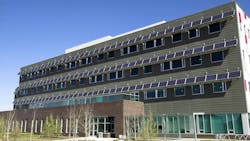
For commercial real estate developers, reducing energy use and long-term operational costs while maintaining comfort for tenants can seem like a daunting balancing act, but there are several options depending on your project. One of those options is provided by Phius (formerly Passive House Institute US), a performance-based building certification standard that focuses on energy efficiency, comfort, and resilience.
Phius sets the standard for passive building in North America. Its approach uses five core principles to create safe, resilient, and energy-efficient buildings for commercial, residential, and multifamily projects.
While meeting Phius standards can sometimes require up-front costs, the resulting lifecycle savings and incentive stacking can yield a powerfully positive net present value. Phius-certified buildings use 40-60% less energy than code-built structures, and their advanced heating and ventilation systems provide a constant flow of fresh, filtered air for superior indoor air quality. What’s more, Phius certification is a powerful market differentiator, helping to attract sustainability-conscious tenants and investors.
Every three years, Phius updates its certification standards to keep pace with the latest industry trends, climate goals, code cycles, and changing climate. Below, you’ll find a summary of key changes found in the new 2024 standards, and why meeting those standards can be beneficial to owners, developers, and tenants.
Phius CORE 2024: New Construction Projects
Phius Core is the foundation for all Phius certification levels. It is used as the benchmark for designing and constructing passive buildings. In 2024, there were no major changes made to certification requirements, but several targets were optimized to more accurately reflect the real-world energy use, carbon impact, and comfort requirements of multifamily buildings as explained next.
Higher Cooling Demand Allowance
Phius now permits a greater annual cooling demand before a project fails to meet certification. This change recognizes the naturally higher internal heat gains of multifamily buildings, due to the density of occupants and appliances per square foot.
This change means that developers and facilities teams won’t need to “overbuild” the envelope or mechanical systems to meet unrealistic standards. It will help lower design and capital costs, while also making it more feasible to ensure the comfort of residents throughout the year.
Revised Source Energy Factor for Electricity
The Source Energy Factor (SEF) accounts not only for a building’s on-site energy use, but also for all the upstream energy required for extraction, generation, transmission, and distribution of that energy. Another key 2024 update to Phius is an increased SEF for electricity, made to reflect updated average U.S. grid emissions.
This higher SEF means that buildings relying heavily on electric end uses can more easily exceed their maximum annual source energy use, as set by Phius. Preventing that may require improved demand management, systems efficiency, and renewable sourcing. The silver lining is that this more realistic measure will guide long-term planning, helping reduce future operational costs and carbon exposure.
Co-Requisite Programs
ENERGY STAR Multifamily New Construction and EPA Indoor airPLUS remain required corequisite programs under Phius 2024. The main update for multifamily projects is the formal inclusion of DOE Zero Energy Ready Home (ZERH) certification. While ZERH was previously encouraged under Phius 2021, it is now required for multifamily projects under the 2024 standard.
In order to receive final certification from Phius, projects must now obtain both ENERGY STAR and ZERH certifications through a third-party submission to a multifamily review organization recognized by the EPA.
While this adds upfront planning and documentation requirements, it will also help ensure that new multifamily constructions achieve higher efficiency and resiliency standards, making long-term operations more predictable, reducing energy costs, and improving occupant comfort and health.
Phius REVIVE 2024: New Standards for Existing Buildings
Released in July 2024, the updated Phius REVIVE 2024 Standard represents a complete departure from Phius REVIVE 2021, introducing requirements that are entirely independent of the standards for new buildings.
ADORB
With core objectives focused on resilience, health, and decarbonization, REVIVE 2024 seeks to balance project costs through the Annualized Decarbonization of Retrofitted Buildings (ADORB) metric, requiring that the sum of the annualized costs in the proposed design not exceed those of the existing baseline conditions.
Satisfying this requirement will involve careful analysis of the cost-effectiveness of retrofit measures, considering trade-offs between envelope, mechanical, and renewable systems, and working closely with designers and energy modelers to find the right balance.
A New Step in Planning
One key process difference from the 2021 standard is the introduction of an assessment and investigation phase, which takes place after determining a building is a strong retrofit candidate, but before the design phase begins.
Completing this early analysis will require planning and process changes, but the result will be a more detailed understanding of a building’s existing conditions—including envelope performance, mechanical systems, and potential retrofit challenges. This will lead to more data-driven decision making, helping identify cost-effective upgrades, anticipate operational impacts, and predict potential issues during construction.
Performance-Based Targets
REVIVE 2024 also sets project-specific energy performance targets based on a building’s size, use, and location. Any retrofitting will need to meet annual heating, cooling, and source energy limits, which may require energy modeling and system optimization.
Resilience Requirements
REVIVE 2024 also requires buildings to be capable of maintaining habitable indoor conditions for at least one week during extreme heat, cold, or power outages. Meeting these resilience criteria will likely require planning for backup systems, passive survivability measures, thermal storage systems, etc.
Co-Requisite Requirements
While the certifications required by REVIVE are the same as those required by CORE, the context, challenges, and integration strategies differ significantly. Working within the constraints of existing building systems, envelope conditions, and occupant patterns requires careful assessment of which upgrades are feasible, cost-effective, and compatible with the current infrastructure.
Achieving ENERGY STAR, Indoor airPLUS, and ZERH certifications often involves phased interventions, targeted envelope improvements, and strategic system replacements. This makes thorough planning and documentation all the more crucial.
Conclusion
Owners and developers unsure about whether Phius is right for their project can hire consultants to conduct a feasibility study to clarify where a project fits relative to program targets and requirements. Phius-certified buildings provide energy savings of 40-60%, compared to regular buildings, and set the standard for the building industry’s mission of net zero.
About the Author
Emily Durso
Emily Durso is senior project manager who specializes in whole building energy simulation (including WUFI modeling), thermal bridge modeling, hygrothermal analysis, and high performance construction verification. Currently at Bright Power, Inc. in New York, she leads multifamily development projects pursuing certifications such as ENERGY STAR, Enterprise Green Communities, and Phius, including many NYSERDA Buildings of Excellence awardees. Emily served as a Phius Certified Consultant (CPHC) for the Chestnut Commons project, which won the High-Rise Multifamily and Best Project by a Young Professional awards in the 2023 Phius Passive Projects Design Competition.
Hiromi Tabei
Hiromi Tabei is a seasoned senior project manager with extensive experience in sustainable architecture and construction. Currently at Bright Power, Inc. in New York, she leads multifamily development projects pursuing certifications such as ENERGY STAR, Enterprise Green Communities, and Phius. With a background in architectural design and consulting, Hiromi has contributed to high-impact projects across the U.S. and internationally, including post-disaster reconstruction efforts in Japan. She holds a Master of Architecture from Boston Architectural College and is a Phius Certified Consultant and Registered Architect in Massachusetts.