What Facilities Managers Need to Know About SITES Certification
Key Takeaways
1. Landscapes are critical performance systems
Outdoor spaces aren’t just aesthetic—they actively manage stormwater, reduce heat, support wellbeing, and protect assets. SITES reframes landscapes as infrastructure that directly impacts building performance.
2. Resilience must extend beyond the building envelope
Flooding, drought, and extreme heat require site-level strategies. Preserving natural systems and integrating features like bioswales and permeable paving can reduce risk and strain on municipal systems.
3. “Stacking functions” drives efficiency and value
High-performing sites serve multiple purposes at once—stormwater management, social space, biodiversity, and cost reduction—maximizing ROI from the same footprint.
4. Long-term value outweighs upfront costs
SITES strategies can lower maintenance, reduce infrastructure strain, and even generate revenue. Well-designed landscapes appreciate over time and are increasingly important in climate risk and insurance considerations.
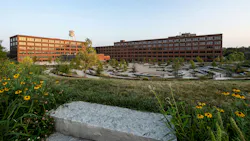
Why Facility Managers Need to Think Beyond the Building
Sustainability and resilience are central to building performance, but as extreme weather intensifies, resilience must extend beyond the building envelope.
That’s what the Sustainable SITES Initiative certification helps address. SITES provides a framework for designing and managing landscapes that support ecosystem health, improve human wellbeing, and strengthen resilience during severe weather. Many facility managers understand LEED; SITES expands the conversation to address the land itself, whether or not a building exists.
“Facility managers aren’t just managing buildings. They are managing the entire site,” said Danielle Pieranunzi, SITES director for the U.S. Green Building Council. “The landscape, infrastructure, and outdoor spaces all play a role in performance.”
SITES encourages builders and facility managers to view outdoor spaces not as passive or decorative elements, but as active systems that, when properly designed and managed, can reduce risk, improve occupant wellbeing, lower operating costs, and much more.
Landscapes as High-Performance Systems
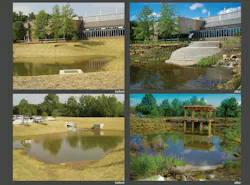
Fundamentally, SITES urges facility managers and maintenance teams to rethink the function of outdoor spaces and how they are designed and managed. Rather than limiting a green lawn to a single, aesthetic purpose or a basin for stormwater capture, a landscape can serve multiple roles and address multiple goals simultaneously.
Green infrastructure treats and soaks up rainwater where it falls through filtration, infiltration, and evapotranspiration that delivers stormwater management, environmental, social, and economic benefits, according to the Environmental Protection Agency. Nature-based solutions, green stormwater infrastructure, and low-impact development are related terms that describe approaches using natural systems to improve air and water quality, reduce flooding and urban heat, provide wildlife habitat, and create beautiful green spaces.
Described as stacking functions, this SITES concept asks teams, for example, to examine how a single-function stormwater pond can be transformed to provide a shaded gathering space for employees and a landscape that also supports biodiversity and habitat. Additionally, water-intensive lawns are often underutilized and unsustainable due to extensive maintenance, such as watering, fertilizing, and mowing. So, do as some SITES-certified projects have done, convert them into native landscapes to reduce maintenance and conserve resources, while enhancing ecological value, and creating a more engaging, beneficial environment for employees to experience nature and receive the multiple physical and mental benefits of being in nature.
SITES reframes landscapes and outdoor spaces as assets for people, business, and ecosystems.
One project shows how SITES principles translate from theory to performance.
Case Study: Davidson Park Transforms Impervious Space
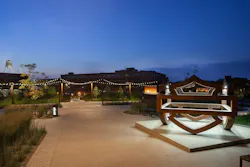
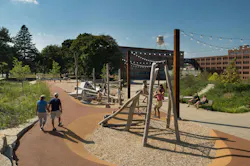
SITES principles are evident in projects like Davidson Park in Milwaukee, which transformed a largely impervious site into a place for people to enjoy the outdoors.
The original site featured several acres of surface parking adjacent to Harley-Davidson’s campus. This paved, utility-dense block drained into an overburdened combined sewer system. The Harley-Davidson team was invested in the neighborhood and organized an appreciative inquiry summit that included 200 residents, businesses, and local organizations. One priority emerged: a need for safe, accessible outdoor space.
Designed by Heatherwick Studio in collaboration with HGA, Davidson Park posed significant challenges for stormwater management due to the park’s bowl-shaped design. Stormwater management, material reuse, and indigenous plantings became core priorities. Peter Balistrieri, principal and Corporate Market Sector Leader at HGA, said a home and hearth idea was the vision for the park.
“Embedded in that idea in our early conversations was the promotion and celebration of sustainability in every form we could muster,” he said. “When we talk about that as the ethos of the project, we wanted to measure that, and that’s where SITES came in. We often use LEED when we’re doing our buildings for that same purpose, and this is a non-building project, so SITES was a perfect tool to do that.”
Designing for Flood, Drought, and Heat
Facility managers should question their spaces more, especially as our facilities experience more climate risks from flooding, drought, and extreme heat.
SITES emphasizes working with natural processes rather than relying solely on engineered systems. Preservation of existing floodplains and wetlands is a critical first step. These systems provide essential services from stormwater absorption to flood risk reduction.
“If you remove those systems, you’re going to pay for it down the road,” Pieranunzi said.
Add in bioswales, raingardens, and green roofs as strategies to mitigate flooding, improve water quality, and reduce the strain on municipal infrastructure. These sustainable strategies can filter pollutants and control sedimentation. They also allow water to infiltrate the ground, controlling onsite and downstream flooding.
SITES also addresses drought resilience through plant selection and soil health. Using native plants reduces irrigation demands, while healthy soils improve water retention and support long-term plant viability. The soil is often an overlooked foundation of healthy landscapes that may require restoration and insights from a landscape architect or soil scientist.
Engineering Stormwater Performance
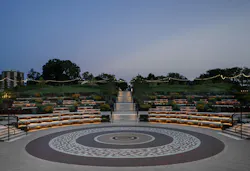
Guided by stakeholders and SITES, HGA and Heatherwick Studios wanted to pay homage to a motorcycle wheel hub, so they designed “The Hub,” which transformed the central part of the park into a sunken multi-use events amphitheater and rally area featuring tiered flexible promenades for seating, motorcycle parking, and vendor spaces.
Stormwater management was a defining challenge for the project due to the bowl-shaped topography serving as a central gathering space. With careful planning, the team used permeable paving and expanded green space that allows water to infiltrate the ground directly. Beneath the surface, a large storage system captures and gradually releases stormwater. This system prevents surges into Milwaukee’s combined sewer system—a major consideration in metropolitan areas with shared stormwater and wastewater infrastructure. Peak storage volume is more than 230,000 gallons through bioswales, permeable pavers, and underground storage systems on site. The impervious surface decreased by over 40% and drops peak flows to the combined system by over 50% during storms.
“Think of it as a giant storage container underground,” Balistrieri explained. “It’s a series of half pipes that are connected, and then they fill up. So, the stormwater goes into that first, and then at the end of that pipe system, up a little bit higher, is the outlet. There’s a way for that water to both infiltrate the ground, and when it can’t keep that capacity going, it will surge out.”
Investment in this infrastructure has been measurable. As the region experienced flooding in 2025 and early 2026, the site remained operational and managed the surge in water.
“For a site that’s designed to collect water, it’s performing exceptionally well,” he said.
Davidson Park demonstrates the value of working with natural processes. By protecting and enhancing the site’s ability to absorb and manage water, the landscape reduces the risk of damage to the site and surrounding buildings and infrastructure.
Cost, Operations, and Long-Term Value
Implementing resilient strategies needs to make sense for the bottom line before a project gets the green light. SITES can deliver on that front.
Projects that prioritize locally sourced materials, native plants, and restore existing soil conditions can significantly reduce upfront and ongoing costs. In one case, Pieranunzi shared how a New Mexico project saved $250,000 by using local soil and native plants.
At Davidson Park, the long-term viability required careful plant and material selection along with an operational strategy.
The project used durable materials capable of withstanding weather and frequent use. Native plants can thrive in local conditions, reducing the long-term maintenance requirements and need for irrigation and fertilizers.
Balistrieri noted how the park generates revenue for Harley-Davidson from community events and movie nights to motorcycle rallies, which helps with upkeep.
Safety was a core tenet that arose from the summit, so Harley has 24/7 security on the premises, reinforcing the need as an accessible community asset and functional landscape system.
“Looking at it holistically is really important with your partners, with whom you bring in to collaborate along the way to create the best outcome you can possibly create,” Balistrieri said. “If done well, you can design something that is enhanced by a lot of voices that represent a broader spectrum of end users, clients, community, and construction team. When done well, you can create something better than when the original idea was created.”
Beyond immediate savings, SITES adoption encourages a long-term view of value.
“Buildings and roads depreciate over time, but landscapes—if designed and managed sustainably—appreciate in value, providing long-term benefits that even extend the property boundary,” Piernanuzi said.
Shifting to this perspective is gaining traction as insurance companies and property owners factor climate risk into decision-making. Landscapes designed to absorb water, provide shade, and regulate temperature can reduce damage during extreme events.
Why Landscape is Still Overlooked
Historically, outdoor spaces have been treated as aesthetic add-ons rather than key building system components.
SITES positions landscapes as critical infrastructure and requires owners to bring the right people to the table in the beginning through an integrated design team approach to get the design in the best space.
It also embraces natural cycles and plant variability with the seasons. Native landscapes are not always green year-round, but these plants are more resilient and fulfill an ecological function that benefits the ecosystem.
Piernanuzi says, “For some, this approach may also require a culture shift in what makes a landscape beautiful. A designed and built landscape must go beyond skin deep and embrace sustainability to be truly beautiful and ultimately high performing.”
As facility managers seek to futureproof their properties, SITES provides a pathway to integrate operational efficiency, sustainability, and resilience—starting at the soil. As Davidson Park showcases, SITES strategies can mitigate risk to adjacent landscapes, reimagine spaces people want to use, and redefine what it means to be a good neighbor.
4 Next Steps for Facility Managers
1. Audit your site—not just your building
Evaluate lawns, paved areas, and underutilized spaces for opportunities to improve performance, reduce maintenance, and support resilience.
2. Identify opportunities to replace “passive” landscapes
Convert water-intensive turf or unused areas into native plantings or multi-functional spaces that reduce irrigation and maintenance costs.
3. Integrate strategies to manage stormwater, mitigate heat, and other site-specific resilience measures into operations planning
Explore solutions like bioswales, rain gardens, permeable paving, and underground storage to manage runoff and mitigate for other extreme weather events, while reducing pressure on infrastructure, protecting building assets, and creating a more engaging outdoor environment for employees and visitors.
4. Build an integrated project team early
Engage landscape architects, engineers, and stakeholders at the outset to align site design with operational, financial, and resilience goals.
About the Author
 Lauren Brant
Lauren Brant
Buildings Editor
Lauren Brant is the editor of Buildings. She is an award-winning editor and reporter whose work appeared in daily and weekly newspapers. She strives to create content that is informative and actionable for professionals, helping them discover new products, technology, and insights to make smarter building decisions. In 2020, the weekly newspaper won the Rhoades Family Weekly Print Sweepstakes—the division winner across the state's weekly newspapers. Lauren was also awarded the top feature photo across Class A papers. She holds a B.A. in journalism and media communications from Colorado State University-Fort Collins and a M.S. in organizational management from Chadron State College.