Optimizing Industrial Facility Retrofits for Future-Ready Manufacturing
Key Highlights
- Retrofitting should start with a thorough analysis of production flow and future expansion requirements to avoid costly structural modifications later.
- Modern manufacturing relies on flexible, interconnected systems that demand optimized layouts supporting real-time data and automation technologies.
- Increasing production complexity necessitates adaptable facility designs that accommodate high-mix, low-volume operations and frequent reconfigurations.
- Early planning and collaboration between operations and facility teams help align structural decisions with long-term manufacturing goals.
- Implementing modular infrastructure and scalable layouts enhances flexibility, reduces disruptions, and supports sustainable growth.
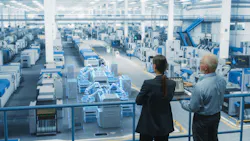
Industrial facility retrofit planning focuses on automation and digital technologies while overlooking the physical constraints that determine project success. Many manufacturers invest heavily in advanced equipment and smart systems, only to discover that outdated layouts or inefficient material flow limit the performance gains those technologies were expected to deliver.
Before pouring concrete, relocating structural columns, or making other irreversible facility modifications, organizations should carefully evaluate production flow and future expansion requirements. A thorough assessment ensures that building changes support long-term operational goals and prevent costly redesigns after new equipment and systems are installed.
The Shift From Linear Manufacturing to Dynamic Production Ecosystems
Modern production lines depend on real-time data systems and flexible manufacturing cells to improve efficiency and responsiveness. This shift continues to accelerate, with more than 50,000 industrial robots installed in the Americas in 2024, with the U.S. accounting for 65% of those installations. As manufacturers integrate advanced technologies into their operations, production environments become more interconnected and data-driven than traditional assembly-focused facilities.
These systems require seamless coordination between equipment, personnel, inventory, and material handling processes. Effective manufacturing floor plan optimization supports this connectivity by reducing unnecessary movement and improving access to critical resources. Layouts originally designed for older manufacturing models struggle to accommodate modern workflows, which restrict throughput and reduce the effectiveness of technology investments.
Production Complexity Is Increasing Faster Than Facility Adaptation
High-mix, low-volume production strategies have become common as manufacturers respond to changing customer expectations. Greater demand for customization requires production systems that accommodate various products. At the same time, shorter product life cycles force organizations to introduce new items more frequently. This reduces the usefulness of layouts designed around long-term, repetitive production runs.
These requirements lead to more frequent line reconfigurations and workflow adjustments. Facilities that once supported efficient operations under stable production conditions may now struggle to handle changing product mixes and expanding automation requirements. As a result, limited floor space and inflexible infrastructure restrict throughput and reduce an organization’s ability to scale operations.
Industrial Facility Retrofit Planning Starts With Production Flow Analysis
Poorly planned movement adds handling time and reduces overall productivity throughout the facility. In some environments, a process layout is the most effective approach for companies with low-production-volume facilities and nonrepetitive tasks. This is because the workflow revolves around the production process and follows a logical sequence of activities.
Successful industrial facility retrofit planning requires organizations to look beyond existing operations and evaluate how production needs may change over time. Hidden operational conflicts also appear when departments compete for limited space or transportation routes, limiting operational flexibility. A comprehensive assessment of future production scenarios ensures facility modifications support long-term efficiency and collaboration across functional areas.
The Hidden Cost of Structural Decisions Made Too Early
Correcting facility layout mistakes after installation creates significant financial and operational burdens. Relocating equipment, rerouting utilities, and adjusting production workflows require costly construction work and production downtime. These disruptions reduce output and increase the overall cost of modernization initiatives.
Manufacturing floor plan optimization helps organizations identify potential constraints before major investments are made, which reduces the risk of costly redesigns later. Utility routing is also critical for equipment placement and long-term flexibility. Power, compressed air, and network infrastructure can determine where facility managers can install machinery and reconfigure production lines easily.
Prepare for Digital Manufacturing Environments
Industry 4.0 technologies require a robust digital infrastructure that extends beyond equipment. Sensor networks continuously collect operational data from machines and production processes, while edge computing enables data processing closer to the source to reduce latency. These technologies depend on reliable connectivity and integrated systems that can exchange information across the facility.
Machine connectivity and real-time operational visibility allow manufacturers to identify bottlenecks and respond quickly to changing production conditions. As a result, digital infrastructure requirements influence facility planning decisions, including power distribution and space allocation for data-processing resources. It is essential to incorporate digital infrastructure planning into modernization and expansion projects from the outset.
Build Flexibility Into Production Space
Modular production zones and scalable infrastructure strategies help manufacturers adapt to changing production requirements. Organizing operations into flexible, self-contained areas lets organizations introduce new technologies or reconfigure workflows with less disruption. Effective industrial facility retrofit planning also prioritizes adaptable equipment layouts that accommodate future production changes while maximizing existing asset value.
Replacing machinery can deliver positive short-term benefits through the digitization of the production line, which improves automation capabilities. However, this approach is often expensive and can conflict with sustainable production principles by increasing resource consumption and equipment waste. Modular infrastructure and expansion-ready floor plans reduce disruption and allow manufacturers to modernize operations while maintaining long-term flexibility.
Indicators of a Facility Layout That Is Limiting Production Potential
Excessive material handling distances and frequent production interruptions caused by congestion signal that a facility layout no longer supports operational requirements efficiently. These issues increase transportation waste, slow production flow, and reduce overall productivity. Lean manufacturing principles address these challenges by removing unnecessary items from factory floors and maximizing profit potential through more efficient use of available space.
Manufacturing floor plan optimization can identify layout inefficiencies before they escalate into larger operational problems. Warning signs become more apparent when expansion plans require major structural modifications or when new equipment installations disrupt production activities. These challenges indicate that the existing layout may be limiting flexibility, making it more difficult to accommodate growth and maintain efficient production flow.
Aligning Facility Design With Long-Term Production Strategy
Successful facility modernization requires close collaboration among operations leaders and facility planners. Early coordination also improves visibility into potential challenges before construction or equipment installation begins. Integrated planning reduces the likelihood of costly redesigns and operational disruptions by aligning facility modifications with manufacturing needs.
An effective layout can lower total manufacturing operational expenses by reducing material handling costs and overall production time. Before committing to structural modifications, organizations should validate production flow assumptions through detailed analysis and modeling. This step confirms that the proposed changes will support future production requirements rather than create new bottlenecks.
Designing Production Spaces for Future Growth
Advanced manufacturing performance depends on aligning facility design with future production requirements. Effective industrial facility retrofit planning helps organizations avoid costly mistakes that can occur when permanent building decisions are made without fully understanding production flow and spatial needs. Evaluating future-state operations first can create facilities that support long-term flexibility and sustainable growth.
About the Author
 Emily Newton
Emily Newton
Emily Newton is an industrial and tech journalist passionate about how technology is revolutionizing each sector. She has been writing and editing professionally for more than five years and is the editor-in-chief of Revolutionized.