Your First LED Retrofit Is Aging: How Facility Managers Can Prepare for the Next Replacement Cycle
Key Highlights
- Understanding the replaceability and support status of existing LED components is essential to avoid unexpected costs during upgrades.
- Labor, downtime, and waste management often constitute significant project costs, requiring early evaluation and planning.
- Operational disruptions can be minimized through strategic scheduling, phased implementation, and coordination with building occupants.
- Sustainability now encompasses waste reduction, material management, and long-term asset stewardship, not just energy efficiency.
- Modular lighting systems offer future maintainability, allowing components to be renewed without full fixture replacement, reducing labor and waste.
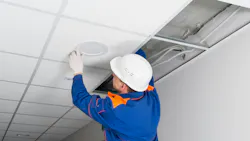
For many facility managers, LED lighting has been one of the most successful building upgrades of the past two decades.
Organizations invested in LED retrofits to reduce energy consumption, lower maintenance costs, and improve lighting performance. In most cases, those investments delivered exactly what was promised. Energy bills declined, lamp replacement cycles became less frequent, and building operations benefited from more reliable and controllable lighting systems.
But a growing number of facility managers are about to face a challenge the industry spent very little time discussing during the first wave of LED adoption: what happens when those systems reach end of life?
Many of the first large-scale LED installations are now reaching maturity. As facility teams begin planning renovation and replacement projects, they are discovering that the next lighting challenge may have less to do with energy efficiency and more to do with maintainability, labor, downtime, waste, and long-term ownership costs.
For many organizations, the biggest lighting expense over the next decade may not be the cost of energy. It may be the cost and complexity of replacement.
Understand What You’re Replacing
The first step in any lighting replacement strategy is understanding the existing system.
Many early LED fixtures were designed as integrated systems. When LED adoption accelerated, the industry’s focus was on improving efficiency, reducing maintenance frequency, and delivering long operating life. Serviceability was often a secondary consideration because the technology itself was still evolving.
As those systems age, facility managers are beginning to encounter a new reality. In many cases, a failed driver or light source can trigger replacement of substantial portions of an otherwise functional fixture.
Before planning a project, facility leaders should ask:
- Can individual components be serviced or replaced?
- Are replacement parts still available?
- Will fixture failure require replacing the entire fixture?
- Is the manufacturer continuing to support the product line?
Understanding these requirements can help organizations avoid unexpected costs and develop more accurate capital improvement plans.
Budget for More Than Fixtures
When organizations plan lighting projects, fixture pricing often receives the most attention. However, labor, downtime, and waste management can represent a significant portion of total project costs.
Replacing lighting systems may require electricians, lifts, temporary access restrictions, and coordination with building occupants. In warehouses, manufacturing facilities, healthcare environments, and educational campuses, access and scheduling challenges can further increase labor requirements.
At the same time, workforce shortages and rising labor costs are increasing the complexity of replacement projects. Facilities may also need to account for disposal costs, recycling logistics, and operational downtime.
Evaluating these factors early provides a more realistic understanding of total project costs and helps organizations avoid surprises during implementation.
Plan Around Building Operations
Even relatively straightforward lighting projects can affect building operations.
Replacement work may require temporary area closures, after-hours scheduling, coordination with occupants, and adjustments to maintenance plans. In facilities that operate around the clock, downtime can be particularly difficult to manage.
Facility managers should identify operational impacts early and develop strategies to minimize disruption. Some organizations align lighting projects with larger renovations, while others use phased implementation schedules to spread work across multiple budget cycles.
Planning ahead is almost always less disruptive and less expensive than responding to unexpected failures.
Make Sustainability Part of the Replacement Discussion
For years, sustainability conversations in lighting focused primarily on energy efficiency. Today, many organizations are taking a broader view.
As aging lighting systems are removed, facility teams are increasingly evaluating waste reduction, material management, and long-term asset stewardship alongside energy performance. Understanding recycling options, disposal requirements, and opportunities to divert materials from landfills can help support broader sustainability goals.
Questions related to durability, maintainability, and replacement requirements can also influence the environmental impact of a lighting system throughout its lifecycle.
In other words, sustainability is no longer just about reducing energy consumption. It is also about reducing unnecessary replacement.
Consider How Future Systems Will Be Maintained
Perhaps the most important question facility managers should ask is also one of the simplest: what happens when the next generation of lighting reaches end of life?
Historically, many integrated LED systems were designed as self-contained units. While this approach helped accelerate LED adoption and improve energy performance, it can also make future replacement projects labor-intensive, disruptive and wasteful.
As a result, the industry is beginning to explore alternative approaches that place greater emphasis on maintainability and long-term asset management. One emerging concept is modularity: the ability to renew or replace key lighting components without removing the entire fixture.
The next evolution of lighting will not be a brighter fixture or a more efficient driver. It may be the ability to renew a lighting system rather than replace it.
For facility managers making long-term capital investments, this raises important questions about future maintenance, upgrades and replacement requirements.
Evaluate Total Cost of Ownership
Historically, lighting projects were often justified through energy savings and simple payback calculations. While those metrics remain valuable, many facility managers are now taking a broader view of ownership costs.
In addition to purchase price and energy consumption, organizations should consider:
- Expected maintenance requirements
- Labor associated with future replacement
- Potential operational disruption
- Product support and replacement availability
- Disposal and recycling considerations
- Long-term asset management requirements
Together, these factors provide a more complete view of long-term ownership costs.
Looking Ahead
The first LED revolution was about reducing energy consumption.
The next is about reducing replacement.
As millions of first-generation LED systems continue to age, facility managers have an opportunity to rethink how lighting assets are evaluated, maintained, and renewed. Understanding serviceability requirements, accounting for labor needs, minimizing operational disruption, and evaluating total cost of ownership can help organizations maximize the value of their lighting investments over time.
The most successful lighting strategies of the next decade may not be defined solely by energy savings. They may be defined by how effectively organizations maintain, manage, and plan for those assets throughout the life of a building.
About the Author
Paul Chamberlain
Paul Chamberlain is the President and CEO of Linmore.