How to Navigate Riot and Protest Damages (BOMA 2026 Preview)
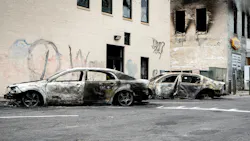
During a riot or major protest, your building may be the target of a range of property damage, from graffiti to broken windows and other physical impacts. But the potential damage isn’t just physical—it can also be reputational, especially if your tenants and their employees feel you weren’t prepared for the riot or didn’t communicate well enough.
Paul Merritt, partner at Fortress Consulting, will moderate a panel on Sunday, June 28, at the 2026 BOMA International Conference & Expo that will help attendees refine their riot and protest plans before, during, and after events. The panel, “A Property Manager’s Guide to Navigating the Aftermath of Riot and Protest Damages,” will include:
- William Walker, chief security officer for Allied Universal and the former 23rd Commanding General of the District of Columbia National Guard
- Chip Merlin, founder and president of the Merlin Law Group and a nationally recognized insurance recovery attorney
- James Kleeman, deputy director of the World Trade Center
Who is at Risk for Riot and Protest Damages?
In theory, any building could be impacted, but some are at higher risk than others, such as buildings with tenants that are likely to be targeted. Businesses and buildings nearby a targeted tenant are also at risk, Merritt explained.
“A good general rule of thumb is that you have to assume your building will be a target, so do the things you put in place that will help mitigate those risks—everything from planning and insurance to communication plans letting your tenants know what’s going on,” Merritt said. “One of the different things about protests is that they usually don’t come out of the blue. With other emergencies, it’s a normal day, and then something terrible is going on. With this—especially if you’re keeping good connection and communication with law enforcement—you’ll know it’s coming.”
3 Important Components of Riot and Protest Recovery Plans
The panel will deep-dive into the post-event phase, which will include navigating the insurance documentation process, managing press inquiries, and other critical follow-up actions. The panelists will cover lessons learned and long-term strategies you can use after a riot or protest event, plus how to plan for what you’ll need to recover. Your recovery plan should include:
- Insurance: Are you covered the way you need to be covered?
- Media relations: Who will handle communicating with the media? How will they know what to say?
- Tenant communication: Your tenants will need to know what’s going on and how you plan to recover. For example, if there is property damage, they will want to know how you’ll address it.
“Remember the importance of planning, training, and having a recovery plan in place before protests ever happen, so you’re able to effectively respond,” Merritt advised. “If you’re missing any of those phases, or you haven’t thought about it or practiced and trained the plan, you’re probably not going to do as well as you think you will.”
Still need to register for the 2026 BOMA International Conference & Expo? There’s still time—sign up today!
About the Author
 Janelle Penny
Janelle Penny
Editor-in-Chief at BUILDINGS
Janelle Penny has been with BUILDINGS since 2010. She is a two-time FOLIO: Eddie award winner who aims to deliver practical, actionable content for building owners and facilities professionals.