The Premium Coffee Experience as Workplace Infrastructure
Key Highlights
- Daily coffee is a widespread workplace ritual and an increasingly important amenity as employees return to shared offices.
- Hospitality-led coffee programs can create everyday opportunities for connection and help make workplaces more inviting.
- Successful programs require planning for utilities, location, queues, staffing, vendor relationships, and preventive maintenance.
- Thoughtful sourcing and clear communication can make a coffee program a visible expression of an organization’s values.

There’s something almost sacred about the daily coffee run—the same walk, the same order, worn into the day like a habit nobody questions. It’s a ritual, and lately, a measurable one.
According to data from the National Coffee Association, two-thirds of American adults now drink coffee daily, a two-decade high, up nearly 7% from 2020. For 14% of past-day drinkers, the workplace itself is their most popular place to get it, ahead of any single café or chain. And as more employees return to shared workplaces, coffee service is becoming an increasingly important workplace amenity that facilities leaders are being asked to plan, operate and support. In the first half of 2026 alone, U.S. office visits rose 6% year-over-year according to Commercial Observer reporting, the narrowest gap from pre-pandemic attendance levels.
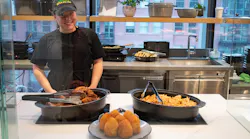
Some companies are rising to the occasion by treating coffee service as serious workplace infrastructure, investing in pop-up barista events and espresso programs run with the same care as a flagship café. Done well, it becomes engagement distilled into a coffee cup, delivering the culture companies talk about in a five-minute daily dose.
The result is hospitality brought into the workplace, one barista station at a time.
Coffee as an Amenity Strategy
A workplace coffee program built on hospitality starts from a simple principle: the goal is connection, and the beverage is what gets people to show up for it.
According to the Gallup State of the Global Workplace Report, just 20% of employees are engaged at work, a gap that costs the global economy $10 trillion in lost productivity annually, or about 9% of global GDP.
Creating environments where employees experience connection and engagement is part of the answer. Gensler surveys show that employees in great workplaces are nearly three times more likely to stay with their company than those who feel disconnected from their environment. And as of 2026, workers rank cafes, markets, and food halls among the most important spaces.
A shared ritual—the same counter, the same faces—is among the few daily moments most employees have in common. Employees across roles and levels can participate in the same experience.
Tenants are asking about this, too. Corporate social responsibility criteria increasingly appear in leasing RFPs, particularly among corporate tenants with sustainability commitments to report against. A documented, values-driven coffee program is a small, visible way to answer that ask.
For facility managers and building owners, all this changes the planning equation. Once a coffee program moves beyond a machine and a bag of grounds, it becomes an amenity that needs the same operational thinking as any other shared workspace.
Behind the Coffee Bar: 6 Operational Musts
A well-designed coffee program balances the employee experience with the operational details that support it. Here are a few fundamentals for corporate tenants, facility managers, and building owners to consider:
- Infrastructure (Owners and Occupiers): Confirm the building or space can support a coffee amenity before committing to equipment. Whether you look at the building holistically as an owner, or at a specific space as an occupier, espresso systems need dedicated electrical capacity, a plumbed water line, and ventilation for heat and steam. Verify all three are in place, or budgeted for, before finalizing a program.
- Traffic and Format (Owners and Occupiers): Model the queue before you pick the spot. For building owners, treat the coffee area’s location like café planning: as attendance climbs back toward pre-pandemic levels, a well-planned queue can help minimize potential friction points like elevator lobbies and lounges by accounting for peak-hour volume and foot-traffic. For owners and occupiers alike, choose the right format, from a permanent station to barista-staffed café area or kiosk, to match your specific space constraints and workplace experience goals.
- Labor and Training (Facility Managers): Build the staffing plan first, then hire. FMs should take the lead on staffing early, strategically defining coverage, onboarding, training and quality assurance upfront. Establish a clear cadence for ongoing support and site visits, too. Consistency is what separates a program from a novelty.
- Sourcing and Vendor Structure (Facility Managers): Match the sourcing and vendor structure with operational goals. A coffee program may need to balance premium quality, local sourcing, supplier diversity, sustainability, and cost. FMs should secure a network of qualified roasters and suppliers, with structured purchasing arrangements that provide consistency and purchasing leverage. Ensure the vendor agreement is flexible enough to support multiple operational formats, from roasted coffee to ready-to-drink and on-tap options.
- Preventive Service (Facility Managers): Put the facility maintenance cadence in writing. Set a strict schedule for site visits and preventive equipment service. Assign ownership for emergency repairs when equipment fails mid-rush—an operational failure point most programs never plan for on paper.
- The Story (Occupiers and FMs): Give the sourcing story somewhere to live beyond the invoice. Whether the beans come from a national roaster, a regional favorite, or the café three blocks away, put that choice somewhere employees encounter it: signage at the station or a line on the cup sleeve.
A deliberately chosen roaster can communicate more than quality. Look for documented attributes such as Fair Trade, organic or B Corp certification, sustainability practices, and relationships with women- or minority-owned businesses.
Designing for Reasons to Be There
Grabbing coffee was never just about the caffeine. It’s the one ritual many employees share in the same space—which is why it belongs alongside fitness centers and conferencing suites on the list of amenities buildings and tenants are learning to plan for with real intention.
The buildings and workplaces that get this right will have figured out something bigger than a better cup: what it takes to make people want to be there.
About the Author
Bruno Loosli
Bruno Loosli serves as Vice President of Operations – East for Guckenheimer, overseeing food operations and programming, focused on operational excellence, client partnership and innovation. Prior to his current role, he led global beverage and hospitality programs, giving him firsthand experience in designing and operating coffee concepts that support both guest experience and operational goals. He works with culinary teams to build on the company’s commitment to hospitality, quality and whole-person health through best-in-class food solutions and exceptional dining experiences.