How to Unlock Building Value with Strategic Decarbonization
Key Highlights
- Incorporating sustainability features like LEED certification can significantly increase rent premiums and total returns for office buildings.
- Strategic decarbonization involves managing energy demand, planning upgrades, and assessing climate-related risks to protect asset value.
- Proactive, phased decarbonization approaches allow buildings to reduce emissions incrementally, avoiding disruptive, all-or-nothing upgrades.
- Cross-department collaboration and early planning are essential for integrating sustainability into capital investments and maintenance schedules.
- Industry standards such as LEED v5 reward buildings with formal decarbonization roadmaps, encouraging proactive sustainability planning.
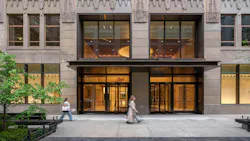
Unlock Building Value with Strategic Decarbonization
What does it really take to decarbonize today’s buildings?
This video offers a quick look at the strategies and shifts shaping lower-carbon operations across the built environment—from energy upgrades to smarter systems and long-term planning. Watch for a high-level overview, then dive deeper into the full article.
Following multiple quarters of increased office vacancy, the availability of quality space is now more difficult to find. Thanks to hybrid work trends, office utilization is up to 53% (from 35% in 2023), according to CBRE’s “2026 Global Workplace & Occupancy Insights.”
One way to make a building more desirable is to add sustainability features. Nearly 70% of office occupiers stated in a 2025 CBRE survey that they would either reject a building or reduce the amount they were willing to pay if it lacked sustainable features and operations.
With LEED-certified buildings in the United States bringing rent premiums of 3% to 4%, and energy-efficient commercial properties surpassing less efficient properties by 5% in total returns, consider decarbonization planning as a financial gain for commercial property gains.
The report “Strategic Decarbonization Planning: Turning Vision into Value in Commercial Real Estate” features insights from CBRE, along with Rocky Mountain Institute (RMI) and the Urban Land Institute (ULI), into how facilities managers and building owners can plan—logistically and financially—for decarbonization improvements to improve sustainability and occupant satisfaction.
Framework for Decarbonization Goals
Decarbonization is no longer just a compliance exercise or a separate project handled solely by a sustainability team, explained RMI Buildings Manager Tamara Grbusic George, one of the report’s authors: “It really needs to become integrated into the way that CapEx is planned, how operating risk is perceived, how leasing competitiveness is going, and how you're preserving asset value in the long run,” she said.
As outlined in the report, a strategic, forward-looking approach means that investors can prepare for system replacements before they fail, maintain occupant comfort while minimizing lifecycle costs, and achieve portfolio-wide decarbonization goals.
The authors from CBRE, RMI, and ULI identify six principles of strategic decarbonization planning, which can benefit facility managers and building owners in various ways.
- Manage Energy Demand: Implementing smart facilities management technologies and IoT-enabled monitoring can optimize energy use, enhance equipment performance, and reduce overall operating costs.
- Apply Life-Cycle-Based Incremental Expense Planning: Using incremental decarbonization overlays on capital plans allows for more strategic leveraging of deferred maintenance budgets to fund high-performance upgrades.
- Align Upgrades with Trigger Events: Sequencing retrofits with natural lifecycle triggers, such as end-of-life equipment replacements or tenant turnover, minimizes operational disruptions and streamlines implementation.
- Phase in Cost-Effective Quick Wins: Conducting proactive energy-efficiency audits and prioritizing less disruptive measures like air sealing or controls optimization can generate high ROI "quick wins" and immediate demand reductions.
- Deploy an Integrated Design Approach: Viewing a building as an interconnected system allows for equipment right-sizing, such as smaller HVAC systems enabled by improved insulation, which reduces both capital and operating costs.
- Consider Risk Overlays: Performing physical risk assessments for climate-related hazards like floods or heat stress helps protect asset value and ensures operational resilience against extreme weather.
Working Across Teams to Achieve Results
To apply the six principles of strategic decarbonization to a building, owners and facilities teams will need to shift from reactive upgrades to a proactive whole-systems method that aligns emissions goals with capital investment decisions.
This approach could mean more upfront work and team communication between building operations and facilities management teams, acknowledged report co-author Kara Kokernak, but the result is coming together with a better understanding of how the building is functioning.
“Getting to know the building more, getting to know how the tenants use it more, and how that changes over time should in the long run make the job easier,” the senior director of Decarbonization at ULI said. “The intention should be a more efficient, better run building and that benefits everybody.”
This cohesive planning approach can also break silos that may naturally form in facilities. Routine building operations and maintenance funds and backlog may be with one department, but sustainability initiatives live elsewhere, explained Senior Director of CBRE’s Sustainability Advisory Brett Bridgeland. The two may not talk to one another.
“Start having conversations when you have problematic equipment, or expanding or changing over a facility,” recommended Bridgeland, co-author of the report. “Go to the places you are making an investment and bring in a sustainability viewpoint. It’s when you’re making a big capital investment anyway, so do it right.”
The report also notes synergies with the six principles and LEED v5 for Operations and Maintenance, which rewards buildings for having a formal decarbonization roadmap. “It’s such a powerful signal that LEED v5 is now rewarding existing buildings to create a plan in advance,” Bridgeland said. “Facility and property managers are going to have a role in that to craft a plan that makes sense for the building. They can start chipping away as opportunities come in the lifecycle of the building.”
Upgrading on Your Terms and Schedule
In most cases, Bridgeland noted, the best way to decarbonize a building is over time.
“There's a big misconception in the industry that decarbonization is all or nothing,” Bridgeland said. “In most building types there are going to be opportunities to partially decarbonize opportunistically... and take a huge bite out of your emissions by doing a partial decarbonization.”
George agreed: “Don’t let trigger events catch you off. If something massive fails in your building, that's not the moment to go back to management and try to figure out. You want all of those decisions pre-made.”
Have a broad strategy in place, align across departments, know which vendors to work with, understand how building systems interact, and anticipate other trigger events, both near- and long-term.
All three suggest proactively defining trigger events yourself and coordinating maintenance or replacements on your terms. Time updates to a lease turnover, design updates, building repositioning, or recapitalization. They encourage looking at the pros and cons of decarbonization updates at once vs. more incremental updates.
While Kokernak agreed that each building is different, the principles of decarbonization can be scaled across a portfolio.
With a strategic plan in place, facility managers and building owners will be better prepared for decarbonization and sustainability enhancements proactively.
How Two Venues Turn Updates into Financial Gains
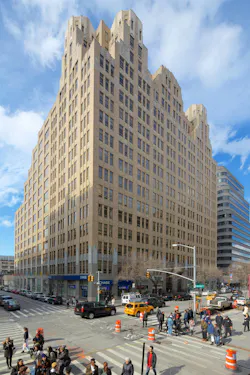
In the report, 345 Hudson and Galvanize Real Estate show how decarbonization efforts can be a competitive advantage.
The 1-million-square-foot 345 Hudson is on track for a 90% carbon reduction by 2035. The project utilizes an "ambient loop" system with water-source heat pumps, which recycles thermal energy by sharing rejected heat between floors. By strategically aligning these upgrades with trigger events, the team slashed retrofit costs by 50 to 60% compared to occupied-space retrofits.
Galvanize Real Estate acquires high-emitting assets to capture the appreciation value of deep retrofits. Their model creates radical accountability by tying 80% of team compensation directly to measurable portfolio reductions.
Both entities move beyond reactive, like-for-like equipment replacement. Instead, they leverage life-cycle planning and integrated design to ensure sustainability outcomes are inseparable from financial performance.
About the Author
 Valerie Dennis Craven
Valerie Dennis Craven
Content strategist and writer
Valerie Dennis Craven is an experienced writer of commercial and residential buildings and interiors, having previously served as Editorial Director for both BUILDINGS and i+s. Valerie enjoys writing about technology and how it impacts users in the built environment.