Life-Giving Water: Why It’s the Most Dangerous Force We Face and What You Can Do About It
Key Highlights
- Water damage is classified into three categories, each with increasing health and safety risks, requiring tailored mitigation strategies.
- Rapid response within hours is crucial; delays can escalate damage, costs, and health hazards, especially in critical facilities like hospitals.
- Older buildings and those in flood-prone areas are more vulnerable, emphasizing the need for proactive maintenance and resilient design features.
- Misconceptions about water damage, such as assuming dry-looking materials are safe, can lead to long-term health issues; proper assessment tools are essential.
- Pre-event planning, including inspections and response protocols, significantly improves outcomes and reduces recovery time after flooding or storms.
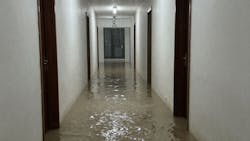
“Water, water everywhere, nor any drop to drink,” is the famous line from Samuel Taylor Coleridge’s The Rime of the Ancient Mariner. The sentiment feels oddly prescient in a world increasingly shaped by catastrophic weather. Water is the most dangerous force on the face of the earth—and paradoxically, one we cannot live without.
That contradiction sits at the heart of what disaster recovery specialists see every day, as extreme weather, flooding, and infrastructure failures become more frequent and more disruptive. From a building restoration standpoint, understanding how water is categorized is critical to protecting both people and buildings.
Water damage is not all the same. Misunderstanding the three categories of water can dramatically increase health, safety, and operational risks for homes, businesses, and critical facilities.
Category 1 water is clean and initially low-risk, but it rarely stays that way. In events such as hurricanes or major leaks, clean water can become Category 2 in minutes as it passes through multiple floors and picks up contaminants. In healthcare settings, even a Category 1 water loss can immediately escalate to Category 2 or Category 3 due to the heightened-risk environment.
Category 2 water, often called gray water, carries some contamination. The risk depends entirely on where it travels and what it encounters, making every incident a case-by-case assessment.
Category 3 water is the most dangerous. It includes raw sewage and coastal flooding, posing severe health risks. Porous materials absorb contaminants quickly, making them extremely difficult—if not impossible—to clean safely.
As mentioned, Category 1 water can quickly become Category 2 during hurricanes, major storms, or overland flooding. Often, initial water intrusion comes from wind-driven rain, which is technically Category 1 at the point of entry. Within hours, water migrates through wall cavities, elevator shafts, and mechanical spaces, picking up insulation fibers, dust, organic debris, and potentially unknown contaminants. By the time a restoration team gains access, what started as “clean water” has escalated to Category 2, with elevated moisture levels and microbial risk. The impact means a more complex cleanup, displaced residents, longer recovery time, and higher costs.
The Risks of Water in Buildings
Risks differ by building type, making certain buildings more vulnerable to storms and flooding. Older buildings tend to be more vulnerable due to aging infrastructure, outdated waterproofing, and limited redundancy in drainage or mechanical systems. They have been built with outdated materials such as asbestos, making remediation more complex. High-rise buildings face vertical water migration issues, while garden-style or slab-on-grade buildings are more susceptible to overland flooding. Critical factors include elevation, drainage design, roof condition, mechanical room location, and building occupation. A hospital, for example, has very different risk implications than a warehouse.
Buildings under construction pose different challenges as well. Water can migrate unexpectedly due to incomplete or unsealed penetrations. Understanding how a building functions day-to-day is just as important as understanding the source of the damage.
I will never forget my experience after Hurricane Harvey in Houston. My team was mitigating a hospital, and there was a five-story commercial office building next door that called for emergency mitigation as well. The problem was that the building was low lying, the first floor was under water, and we couldn’t get within 100 yards of the building until the water subsided. We mobilized equipment intending a drying job, but 48 hours later, when the water finally subsided, we knew it was a demolition job. That’s how quickly water can become dangerous.
Category 2 and Category 3 Water
Category 2 water contains significant contamination—such as detergents, organic matter, or runoff—that can cause illness with exposure. Category 3 water, often associated with flooding or sewer backups, is grossly contaminated and poses serious health risks. Cleanup challenges increase dramatically as you move up through the categories. With Category 3, you’re often removing materials rather than salvaging them, implementing strict containment, and protecting both occupants and workers. The margin for error gets very small, and professional mitigation becomes non-negotiable.
Porous materials like drywall, carpet, insulation, and upholstery absorb water quickly and hold contaminants. Once compromised, they’re extremely difficult to clean effectively. A common mistake is trying to dry these materials without properly addressing contamination. People want to save what they can, but drying without mitigation can lock in bacteria or mold. Sometimes the right call, even though it’s harder upfront, is selective removal to protect the long-term health of the building and its occupants.
Similarly, a big misconception is that “if it looks dry, it’s fine,” because moisture hides behind walls, under flooring, and inside systems. Another misconception is underestimating how fast conditions can change. Water damage is dynamic—it evolves by the hour. Treating it as a static problem is where people get into trouble. Without properly utilizing tools like moisture meters and thermal imaging, it’s very easy to misdiagnose the severity of a water loss.
Mitigation Should Occur Within Several Hours
In hurricane or flood situations, critical facilities like hospitals, senior living communities, and multi-family housing should always be top priority because of life safety and occupancy concerns. Commercial buildings with complex mechanical systems also require fast action to prevent cascading failures. The key is triage—stop the source, stabilize the environment, and prevent spread. The sooner that process starts, the more options you preserve. After 72 hours, you’re often no longer mitigating—you’re remediating.
Extreme weather has forced the building restoration industry to become more proactive and data-driven. We’re using advanced moisture mapping, remote monitoring, and predictive modeling to make faster, smarter decisions. Pre-event planning has become just as important as post-event response. At First Onsite, we emphasize scalable response models and cross-trained teams so we can support entire communities, not just individual buildings, when large-scale events occur.
From a mechanical/facility perspective, we see a lot of losses from aging pipes, failed HVAC condensate lines, clogged drains, and malfunctioning fixtures. These incidents are often localized at first, which gives owners a window to respond if they catch it early. Storm-related events are different because they tend to overwhelm multiple systems at once. Internal failures are often preventable with maintenance and monitoring, while storms require resilience and preparedness.
Proactive planning starts with knowing your building and having a response plan before a storm hits. That includes pre-event inspections, clear communication protocols, and established relationships with response partners. We’ve had success in South Carolina, Florida, and Texas where early mobilization— pre-staging equipment and teams—reduced downtime by weeks. Planning doesn’t eliminate risk, but it absolutely changes outcomes.
We’re seeing more investment in resilient design, such as elevated mechanical systems, better drainage, flood-resistant materials, and smart sensors. Sustainability and resiliency go hand in hand. Protecting a building from water damage reduces waste, lowers long-term costs, and supports the surrounding community by keeping people safely housed and businesses operational.
For building operations and maintenance, roof drainage, HVAC condensate systems, sump pumps, and moisture detection systems are all critical. These are often overlooked until they fail. Condensate systems tend to grow algae. Sump pumps notoriously have sludge built up that needs removal. Regular inspection and real-time monitoring can turn a potential disaster into a manageable incident.
If I could give building owners or facility managers one key piece of advice about responding to water incidents, especially during hurricanes, flooding, or mechanical failures, it would be: don’t wait for a problem. If you don’t have a reliable relationship with a restoration partner, now is the time. The moment water enters a building, the clock starts ticking. Early action protects people first, then property. As leaders, whether we manage buildings or response teams, we have a responsibility to act decisively and thoughtfully. When we do that well, we’re not just restoring structures—we’re supporting the people and communities that depend on them.
About the Author
Brian Speckhals
Brian Speckhals is the Regional Director of Operations at First Onsite Property Restoration. He is a disaster recovery expert based out of Savannah, Georgia.