Adapting Commercial Buildings to Climate Extremes: A Practical Guide
Key Highlights
- Insurance costs for commercial buildings are expected to nearly double by 2030 as billion-dollar weather disasters expose vulnerabilities in drainage, roofing, building envelopes, and emergency preparedness.
- Six strategic actions can reduce climate damage: upgrade drainage systems, strengthen roofs, enhance waterproofing, select climate-appropriate materials, develop emergency response plans, and establish vendor partnerships before disasters strike.
- Facilities with organized flood emergency response plans experience 70% less damage than unprepared buildings, making proactive investments easier to justify as insurance premiums rise.
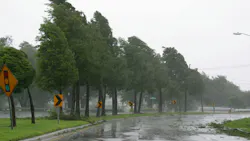
Last September, Hurricane Helene tore through the Southeast with 140 mph winds. The coastal damage was expected. What caught people off guard was the catastrophic flooding in Asheville, North Carolina—a city in the Blue Ridge Mountains, hundreds of miles inland. Buildings that had never flooded before were suddenly underwater.
Asheville wasn’t supposed to be vulnerable. But that’s the problem facility managers are grappling with now: the old playbook doesn’t work anymore.
In 2024, the U.S. saw 27 weather disasters that each caused over $1 billion in damage. The total bill hit $182.7 billion, according to NOAA’s National Centers for Environmental Information. For facility leaders, this shows up in insurance renewals. Premiums are climbing fast—average monthly costs for commercial buildings are expected to nearly double from $2,726 in 2023 to $4,890 by 2030, per Deloitte Center for Financial Services research. Buildings in high-risk states could see costs hit $6,062 per month.
The question isn’t whether to prepare. It’s how to do it strategically.
The Gaps in Your Building’s Defenses
Most commercial buildings were designed with historical weather patterns in mind. A “100-year storm” used to mean something. Now those storms are showing up every few years, bringing rainfall that overwhelms drainage systems sized for conditions that don’t exist anymore.
Insurance companies are pricing in this reality. The average commercial building now spends 2.4% of its income on insurance, double what it was five years ago, according to MSCI’s property index data. In hurricane-prone metros like Tampa and Orlando, that figure climbs above 4%.
Here’s where buildings typically fall short:
- Drainage and grading can’t handle heavier rainstorms. Water pools against foundations or floods parking structures because the system was designed for different rainfall patterns.
- Roof systems fail under wind loads or ice dams they weren’t built to withstand. Small issues in flashing or drainage that used to be minor maintenance items now become major vulnerabilities during severe events.
- Building envelopes let water intrude through aging sealants, improperly installed windows, or foundation cracks that widen during more frequent freeze-thaw cycles.
- Materials degrade faster when exposed to temperature swings and moisture levels outside their expected range.
- Emergency plans either don’t exist or haven’t been updated to account for new hazards.
Your Climate Resilience Action Plan
1. Evaluate and Upgrade Drainage Systems
Compare your drainage capacity against current rainfall data, not the historical averages your system was designed for. Many cities now publish updated stormwater design standards that reflect observed changes in precipitation intensity.
Check whether your site grading still directs water away from the building, or if settling and landscaping changes have created new flow paths toward your foundation. Bioswales and permeable pavement can absorb more water on-site instead of overwhelming storm drains during peak events.
2. Strengthen Your Roof System
Schedule regular inspections focused on the details that fail during high winds: flashing around penetrations, edge securement, and membrane seams. If you’re in an area with increasing hail or wind risk, talk to your roofing contractor about impact-resistant materials during your next replacement cycle.
Make sure roof drains and scuppers get cleaned regularly, not just annually. One blocked drain during a heavy downpour can overstress your roof structure.
3. Enhance Waterproofing and Building Envelope
Focus your envelope assessment on grade transitions, where water intrusion most often occurs. Check window and door seals, look for cracks in foundation walls, and verify that your below-grade waterproofing is still intact.
Update sealants before they fail completely. A proactive resealing program costs far less than water damage remediation. For buildings with critical equipment in basements or ground-floor spaces, evaluate whether flood barriers or sump pump systems make sense as backup protection.
4. Select Climate-Appropriate Materials
When replacing building components, choose materials rated for conditions more extreme than what you’ve historically experienced. If your region is seeing wider temperature swings, pick materials with broader performance ranges.
Durability matters more than it used to. A cheaper material that needs replacement in 10 years instead of 15 is a false economy when you factor in labor and disruption costs.
5. Develop Comprehensive Emergency Response Plans
This is where preparation pays off most clearly. Facilities with well-organized flood emergency response plans experience 70% less damage than those without them, according to FM Global’s analysis of thousands of commercial properties. They also get back to normal operations faster.
Your plan should spell out exactly who does what when a storm warning is issued. Who moves inventory to higher ground? Who shuts down which systems? Document the location of shutoffs for water, gas, and electrical systems. Make sure multiple people know where these are.
Practice your plan. A yearly tabletop exercise will reveal gaps you didn’t notice when you wrote it.
6. Build Strategic Vendor Partnerships
Line up disaster restoration and construction vendors before you need them. After a major storm, everyone is calling the same contractors. Having established relationships means you’re not starting from scratch when you’re already dealing with damage.
When vetting vendors, ask about their experience with climate-related projects specifically. The contractor who’s great at tenant improvements might not understand the engineering requirements for flood barriers or wind-resistant roof systems.
Establish service agreements that prioritize your facility for emergency response. The cost is usually minimal compared to the value of getting help quickly when you need it.
Planning for What’s Next
Climate adaptation isn’t a project you finish. Start with an honest look at where your building is most vulnerable. Prioritize improvements based on your specific risks and your insurance feedback. Your carrier is pricing in their assessment of your vulnerabilities—use that information to guide where you invest.
The facilities that come through extreme weather events with minimal damage aren’t lucky. They’re prepared. And that preparation is getting easier to justify as the true cost of inaction becomes clearer in insurance premiums, business interruptions, and emergency repairs that could have been avoided.
About the Author
Jay Stephenson
Jay Stephenson is executive vice president at Mooring, bringing over 25 years of experience in commercial construction and project management. He oversees the company’s commercial construction, tenant improvement, and preconstruction services, specializing in building resilience into commercial facilities across multiple sectors throughout the U.S.
Steve Willis
Steve Willis is vice president of specialty services at Mooring with extensive experience in disaster recovery and building restoration. He holds certifications as an IICRC and ICRA instructor and leads operational teams focused on emergency response and recovery services, helping facility managers prepare for and recover from climate-related building emergencies.