From Data to Decarbonization: How Digital Tools Drive Smarter Building Decisions
Key Highlights
- Buildings contribute nearly 40% of global energy and industrial CO₂ emissions, making decarbonization a top climate priority.
- Embodied carbon, from material extraction to demolition, often remains invisible but can be addressed during early design stages with integrated tools.
- Digital dashboards and scenario modeling enable real-time visualization of carbon impacts, guiding sustainable design choices.
- AI and automation promise to enhance supply chain transparency and suggest low-carbon alternatives, embedding sustainability into every project phase.
- Transforming data into actionable insights fosters a culture of accountability and innovation, leading to measurable climate-positive outcomes.

Urgency in Addressing Carbon Emissions
As governments and investors increasingly demand proof of sustainability outcomes, design teams are realizing that good intentions are no longer enough—quantifiable data has become the new currency of design. The construction and operation of buildings are responsible for nearly 40% of global energy and industrial CO₂ emissions, making the built environment one of the most significant contributors to climate change.
In cities such as New York and London, urban density continues to rise, and building-related emissions are growing faster than those in other sectors, making decarbonization one of the most urgent frontiers in climate action. For building owners, facility managers, and design professionals, the priority is no longer limited to energy efficiency. Achieving real decarbonization requires addressing both operational and embodied carbon throughout the entire building lifecycle. What is most critical is being able to turn design insights throughout the building's lifecycle into actionable decisions that reduce emissions in measurable ways.
The Carbon We Don’t See: Why Embodied Emissions Can’t Be Ignored
Traditional design processes focus on predicting building performance, which is narrowly focused on the operational carbon footprint of a building. While operational carbon is directly tied to a building’s day-to-day use—like heating, cooling, and lighting—embodied carbon includes emissions from extracting raw materials, manufacturing components, and even demolishing and disposing of materials at the end of life. This often represents a large portion of the building’s lifetime emissions before the doors even open. Nonetheless, embodied carbon often remains invisible.
Unlike operational carbon, the embodied carbon footprint can be addressed during the design process before any construction begins. There are few tools used during the design process that provide integrated insight into a project’s whole carbon footprint. Project teams that attempt to account for embodied carbon often rely on disconnected tools: design documentation on one side and carbon analysis on the other. This fractured approach limits designers' ability to make truly informed, low-carbon choices. As a result, designing with sustainability efforts in mind can become a reactive rather than a proactive approach. Unfortunately, teams often discover a project’s carbon impact only after major design decisions are finalized and when changes are most expensive and least impactful.
Turning Data into Decisions: How Software Brings Carbon into Focus
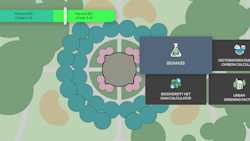
Powerful BIM software platforms are accelerating the transition from siloed predictions to integrated carbon insight. When digital dashboards—an area that shows various types of visual data all in one place—are integrated within the design environment and leverage the primary building model as a trustworthy “single source of truth,” they can provide real-time visualization of carbon impacts as decisions are made.
This setup, often referred to as scenario modeling, enables building professionals and designers to evaluate various design decisions in real-time. For example, a project team could model how switching from a steel to a timber structure reduces embodied carbon emissions by a measurable percentage, or how optimizing glazing ratios affects both daylight and operational energy loads. These insights enable informed trade-offs between aesthetics, performance, and sustainability. Essentially, designers can better understand the impacts and make decisions for true performance-based designs. This means the potential to influence primary outcomes—such as reducing a project’s overall carbon load—even in early schematic design stages. Actionable steps become clear, measurable, and immediately tied to design choices.
Case in Point: Making Data Work for Decarbonization
Digital tools are no longer just for documentation—the integration of data and the ability to query and view that data mean that these tools are also becoming engines of sustainability. For instance, selecting a locally sourced stone over an imported material for a facade can immediately reveal carbon savings on a project’s dashboard. This granular, specific, and instant feedback helps guide greener decisions and provides evidence that can be shared with stakeholders, underpinning sustainability certifications and reporting.
Furthermore, scenario modeling fosters a shift from “best guesses” to informed predictions about the long-term carbon impact of different design alternatives.
The Next Frontier: AI That Designs for Carbon Savings
Automation and artificial intelligence (AI) promise even greater potential for carbon-aware design and operation. Upcoming advances may include real-time supply chain transparency embedded into design tools, or AI-assisted recommendations for low-carbon strategies and materials based on evolving project parameters. Imagine an AI engine that automatically suggests material substitutions when supply chain data shows a low-carbon alternative nearby, or predicts maintenance needs to extend the life of components. These capabilities move sustainability from a reporting exercise to an embedded design intelligence.
Such features will further empower building owners and facilities managers, ensuring transparency and accountability are baked into every step—from procurement to construction to operations.
Leading the Climate-Positive Transformation
The industry’s path to decarbonization doesn’t hinge on a single technology or regulation, but on how effectively we use the information already at our fingertips. True leadership means transforming data into design intelligence and using it to make choices that honor both human and environmental well-being.
The shift from data to decarbonization is a mindset already taking shape in the hands of forward-thinking designers who see sustainability as the foundation of good design itself. It’s about cultivating a culture of accountability and innovation that drives measurable impact across the entire life cycle of the built environment.
As the industry continues to grapple with the realities of climate change, designers equipped with integrated, carbon-aware software can lead the way toward building a climate-positive future. By embracing digital tools that bridge analysis and action, every stakeholder—from architect to facility manager—can become a driver of measurable sustainability outcomes. Decarbonization is now a reality, driven by data and made possible through the intelligent application of next-generation building technologies.
The path forward is both possible and urgent. The tools exist, the data is available, and the opportunity to act is here. By partnering across disciplines and leveraging the power of information, building professionals can make the built environment a cornerstone of global decarbonization efforts—becoming a model for what meaningful progress looks like.
About the Author
Rubina Siddiqui
Vectorworks Senior Product Marketing Director Rubina Siddiqui, Assoc. AIA, utilizes her BIM knowledge and architectural experience to assist with the development of Vectorworks products and to support the Sales and Marketing teams. She works with architects, landscape architects, and lighting designers to understand their needs and goals, and demonstrates how Vectorworks workflows can benefit their projects. Rubina is passionate about communicating how interoperability and collaboration with design partners in various industries are improved with open workflows using the Vectorworks platform.
Rubina earned a Bachelor of Science degree in geology and earth science from George Washington University and a Master of Architecture degree from the University of Tennessee. As a geologist, Rubina worked for the Climate History division of the U.S. Geological Survey. After earning her master’s degree, Rubina worked as both a project architect and a BIM manager for firms focusing on institutional projects, particularly schools. Rubina is an Associate member of the American Institute of Architects (AIA), as well as an active member and volunteer for both the National Organization of Minority Architects (NOMA) and Architecture In Schools (AIS).