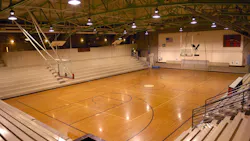
When organizations begin to evaluate the sustainability of their athletic facilities, conversations tend to center around the materials, emissions, and green building certifications. While those factors matter, they only tell part of the story. One of the largest, and most overlooked, contributors to a facility's sustainability is replacing a gym floor before it has reached its intended service life.
Sustainability isn’t only about selecting a flooring system made of the greenest materials. It is also about protecting an existing system. Proper maintenance, proactive care, and environmental management are essential for extending the longevity of a flooring system, and every year a hardwood athletic floor remains in service reduces the need for new materials, manufacturing, transportation, demolition, and disposal. That said, one of the most sustainable flooring systems is one that you don’t have to replace.
Maintenance Mistakes Add Up
Oftentimes, athletic floors don't reach the end of their useful life because of normal athletic use; they are instead replaced due to preventable issues that gradually develop over time.
For example, using household or cheap cleaners instead of products intended specifically for commercial hardwood athletic flooring can reduce lifespan. These cleaners can leave a heavy residue that builds up over time and can even affect the traction on the floor. This damages the floor and can impact gameplay for athletes.
Another main issue that is often overlooked is dirt and grime. Every tiny abrasive particle wears away at the protective finish on the wood flooring. Daily dust mopping may seem mundane, but it plays a large role in preserving the finish and the entire flooring system.
However, the biggest threat to a hardwood gym floor is moisture. From excessive water during routine cleaning to standing water from spills or roof/plumbing leaks, all can damage hardwood flooring. Water needs to be cleaned off the floor immediately to prevent further damage.
Consider Facility Conditions
The environment also plays a big role in the longevity of the sports flooring system. Hardwood naturally expands and contracts with changes in moisture in the air, so maintaining stable relative humidity conditions is critical. It is recommended to keep facility temperatures between 55 and 75 degrees F. and relative humidity between 35% and 55% throughout the year. When there are drastic environmental shifts, the floor will reveal signs of stress from shrinkage, gaps, cupping, crowning, buckling, and cracking. These conditions all point to a floor in distress from environmental factors.
During school breaks and seasonal closings, environmental conditions tend to vary as HVAC systems are often reduced to save energy. Though this is intended to lower operating costs, significant temperature and humidity fluctuations can cause even more expensive damage to the floor.
Minor Updates Before Replacements
It’s important to consider minor updates and incremental repairs before assuming you need an entirely new flooring system. Many issues, such as isolated finish wear, loose boards, or localized damage, can be solved through simple maintenance and repairs, and will preserve the floor’s service life and performance.
In addition to daily maintenance, facilities should schedule professional maintenance and inspections annually to inspect the floor’s condition. Inspections can help identify damaged boards, the state of the finish, and any developing moisture issues before they become costly repairs or complete reinstalls. This saves time and money across the board.
Maintenance as a Sustainability Strategy
The greenest facility assets are the ones that continue to perform year after year because they are properly cared for. By taking the time to prioritize preventative maintenance over reactive replacements, facilities can avoid the environmental impacts associated with an entirely new flooring system, which requires additional material consumption and construction waste. When evaluating your flooring system, it’s important to determine if a new floor is the most sustainable choice, or if a simple maintenance routine can revive the floors for years to come. Sometimes sustainability isn’t about buying something new; it’s about maximizing the value of existing assets.
More Than the Upfront Cost
Flooring decisions are often made based on the initial installation cost, but it is important to think of the lifecycle value as well. A hardwood athletic floor should last 30-45 years if properly maintained. Maintenance is a necessity that protects the original investment, while also reducing waste and conserving resources.
By taking a proactive approach to maintenance, monitoring facility conditions, and fixing minor problems before they become a larger issue, facility managers can protect their investment and the environment. At the end of the day, “the next big thing” might not be the most sustainable option; sometimes it’s about maximizing what’s already beneath your feet.