Fire Rating Knowledge Leads to More Confident Facility Management
Key Highlights
- Building codes like the IBC are updated every three years, affecting existing and new structures in terms of fire and life safety requirements.
- Fire-rated glass and assemblies are tested under UL 263 and ASTM E119 standards, ensuring they can withstand fire conditions without active suppression systems.
- Passive fire-resistance materials offer continuous protection, reducing reliance on complex active fire suppression systems that require regular maintenance.
- Facility managers with current knowledge of code updates can better guide renovation and expansion projects, ensuring safety and compliance while optimizing costs.
- Understanding the balance between passive and active fire defense systems helps create safer, more efficient, and cost-effective building environments.
Navigating model codes like the International Building Code (IBC) requires architects and other building professionals to interpret how general standards apply to specific project uses. This knowledge also benefits those in charge of the operations, repairs, and maintenance that occur throughout a building’s lifespan.
Understanding how building codes influence what is possible within a building informs facility managers’ and building owners’ decisions for construction, renovation, and expansion, provided these professionals know the most recent code requirements. This is particularly relevant when it comes to fire- and life-safety building codes, as they adapt every three years to reflect attainable safety benchmarks.
These code updates may apply to existing buildings or ones that are modified (whether that is through a physical change or change in occupancy). As such, a building that was code-compliant in the past may need to be reviewed to ensure it still achieves a baseline for fire and life safety. These reviews can impact both the design and fire defense systems within the building. For example, a change to Section 703.2: Fire resistance in the 2021 and subsequent editions of the IBC might create challenges in achieving and maintaining code compliance. This section now states fire-resistance-rated assemblies must meet fire testing standards “without the use of automatic sprinklers or any other fire suppression system being incorporated.”
Knowing how this impacts building design can help facility managers and building owners be more confident in decisions that lead to long-term occupant safety and code compliance.
Why Should Facility Managers Care About More Stringent Codes?
In the past, project stakeholders could submit code modification requests that would allow reduced fire ratings for crucial building components along egress paths if those components were in the presence of automatic sprinklers. This allowed tenants the ability to achieve open-concept layouts without the need for passive and expensive fire defense systems. The issue with this approach is that the National Fire Protection Association (NFPA) estimates automatic sprinklers fail to operate in one out of 10 fires. This can put occupants at risk and create liability issues for building owners.
As a solution, fire-resistance-rated materials, like fire-resistive glass, offer passive, around-the-clock defense against fire and smoke as well as radiant and conductive heat transfer according to test standards from UL Solutions (UL 263) and ASTM International (ASTM E119). Both standards assess the fire-resistive capabilities of a full glazing assembly without support from active fire suppression systems like automatic sprinklers. Because an assembly must achieve its ratings through its materials and construction alone, its labeling and ability to act as a critical fail safe during a fire is more accurate.
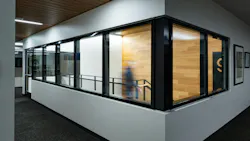
Fire-rated glazing systems do more than offer code compliance. They also support designs that prioritize visual connection, openness and access to daylight—all of which elevate occupant wellness and comfort. As a result, fire-rated glass can help designers create safer built environments while also bolstering end-user experience, and both can lead to increased building value.
How Is Fire-Rated Glass Tested in Accordance with Building Codes?
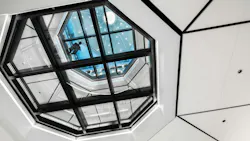
To meet UL 263 or ASTM E119, fire-resistance-rated glazing assemblies are subjected to fire tests and, for ratings over 20 minutes in the United States, the hose stream test. Both tests offer quantifiable data as to how a system holds up in fire conditions, so project stakeholders and building inspectors can assess their appropriateness for a given application.
The fire test recreates conditions based on data from real world building fires. It raises temperatures at a preset rate until it reaches a maximum heat, which it holds according to the expected rating duration. During the test, the glass must not break or otherwise fail. After the test, the full assembly is sprayed with a firehose to ensure it can withstand thermal shock and the force of the water leaving the hose.
If an assembly passes these tests, it is given a non-removable label that meets the marking criteria listed in Table 716.1(1) Marking Fire-Rated Glazing Assemblies in the 2024 IBC.
Sidelining Complicated System Design and Upkeep with Passive Fire Defense
Passive fire-resistance-rated materials and systems protect against fire and life safety threats 24/7. This is in stark contrast to active fire suppression systems, which depend on a trigger to engage.
Active fire suppression systems are often more complex than passive fail safes, both in their initial design and continued upkeep. For most commercial applications, the NFPA requires monthly visual checks, quarterly component inspections as well as formal annual and five-year evaluations. Over-reliance on active systems can create operational inefficiencies even if the systems remain functional.
Passive fire defense often only requires annual inspections for fire doors and if there is a change in occupancy for other elements (like walls and windows). As a result, including these systems throughout the built environment can be a cost-effective strategy for meeting building codes.
Because active and passive fire defense systems have specific roles in keeping occupants safe, it is important for project stakeholders to balance their use in ways that are efficient, effective and functional both now and in the future.
Facility Managers Who Are Aware of Code Developments Drive Value
Although design teams often take the lead in recommending and specifying building components, facility managers who understand the most current building code requirements can understand the context for these recommendations and make more informed decisions about which paths to take toward code-compliance.
This can help meet budgetary concerns when planning renovations and expansions. It can also be crucial to ensuring optimized building management. Both elements of the design and approval process can significantly increase the return on investment for building upgrades and new construction alike—all while meeting or exceeding standards for occupant safety.
Creating safe, code-compliant buildings for all types of occupancies takes multiple teams coming together and utilizing the strengths of all those involved. Facility managers have keen insights into how buildings run and what occupants need. Combining this knowledge with an understanding of current building code requirements reinforces the position of these professionals as crucial members to building design.
About the Author
Steve Lewis
Steve Lewis is a Territory Manager at Technical Glass Products (TGP), a division of Allegion that supplies fire-rated glass and framing systems, and other specialty architectural glazing. Bringing nearly 25 years of experience, Lewis helps Southeast and Mid-Atlantic-based architects, designers and other building professionals create with state-of-the-art products, service and support to maximize design aesthetics and safety in commercial and institutional buildings. Steve is also the product manager for TGP’s crystallized Glass Ceramic panels, known as Neoparies.