Eliminating False Trips and Pressure Drops in Dry Pipe Fire Systems
Key Highlights
- Dry pipe systems rely on compressed air and differential valves to prevent freezing and ensure quick water release during a fire event.
- Regular calibration of air maintenance devices and inspection of system components are critical to prevent false trips and maintain pressure stability.
- Internal moisture from compressors can cause corrosion and leaks; auxiliary drains and nitrogen generators help mitigate these issues.
- Dedicated fire protection air compressors are essential for continuous operation, offering longer service life compared to consumer-grade units.
- Proactive monitoring and routine inspections enable early detection of leaks and component deterioration, reducing emergency response delays.
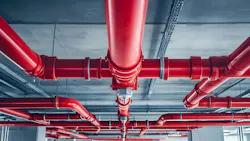
Dry pipe fire sprinkler systems are a critical life-safety infrastructure in unheated warehouses and cold storage facilities where freezing temperatures compromise wet pipe designs. These systems rely on compressed air to hold differential valves closed until a sprinkler head activates, releasing pressure and allowing water flow. Unexplained pressure drops and false trips create operational disruptions and emergency response delays that undermine fire sprinkler pressure maintenance programs.
The Mechanics Behind Dry Pipe System Integrity
Differential dry pipe valves operate on a pressure-area ratio principle that allows low supervisory air pressure to contain higher water supply pressure. A smaller water seat is held back by force distributed across a larger air seat. Through this ratio between the air and water seats, the valve creates a mechanical advantage that maintains system integrity under normal operating conditions.
Small air leaks or deteriorating valve components reduce the supervisory pressure margin and move the system closer to the trip threshold. Temperature fluctuations in unheated spaces compound this challenge by causing predictable air pressure variations that can mask genuine leakage patterns. Facilities that integrate continuous monitoring with preventive maintenance protocols reduce false trip incidents that disrupt operations and trigger unnecessary emergency responses.
Common Culprits of Sprinkler System Pressure Loss
System failures stem primarily from human error and compromised components that allow gradual pressure decay. Research demonstrates that in 79% of incidents in which sprinklers failed to operate as designed, the system had been shut off, sustained physical damage, or lacked proper maintenance. These patterns highlight how organizational oversight gaps translate directly into life-safety vulnerabilities.
Temperature swings in warehouses and parking structures create sprinkler system pressure loss challenges that complicate diagnostic efforts. Air naturally expands when heated and contracts when cooled, which produces pressure variations that can be mistaken for leaks or equipment malfunctions. Recurring compressor cycling patterns often indicate hidden leakage rather than environmental factors. These patterns warrant investigation before facilities resort to repeated pressure adjustments that accelerate compressor wear and mask underlying system degradation.
The Impact of Condensation and Internal Moisture
Standard shop air compressors continuously introduce oxygen-laden moisture into dry pipe networks during normal operation. As water migrates to low points in the piping system and accumulates over time, it initiates corrosive processes that degrade pipe walls and fitting integrity. The resulting oxidation eventually creates pinhole leaks that contribute to gradual sprinkler system pressure loss while introducing particulate contamination.
Auxiliary drains at system low points defend against water accumulation when serviced per maintenance schedules. When performed regularly, these procedures remove accumulated water before degradation develops. Controlling the introduction of water at the compressed air source complements these practices by reducing volume entering the piping network and slowing internal deterioration.
Nitrogen generation provides another approach by replacing oxygen-rich compressed air with nitrogen while limiting moisture within the system. This environment can address two contributors to internal corrosion, which are oxygen and water. However, facilities must select a generator that matches system volume and operational demands to maintain effective supervisory pressure and moisture control.
Preventing System Failures with Purpose-Built Air Compressors
Life-safety applications demand equipment engineered for continuous operation rather than intermittent use. Standard consumer-grade compressors lack the heavy-duty internal components and duty cycles necessary to maintain stable pressure in fire protection systems over extended service lives, making dedicated fire protection air compressors necessary for reliable performance.
Maintaining supervisory pressure in dry pipe systems requires commercial units specifically engineered for fire protection service. These permanently installed units contrast sharply with light-duty or portable pancake compressors, which carry shorter operational lifespans. According to General Air products, when sized and installed correctly, dedicated fire protection models typically provide up to 10 years of continuous field service.
Nitrogen generators offer an advanced solution for facilities prioritizing both pressure maintenance and internal corrosion control. Proper sizing ensures the equipment maintains code-required fill times without undermining the moisture and oxygen reduction benefits inherent to nitrogen inerting.
According to General Air Products, evaluating the following factors is vital to preserving nitrogen purity and system performance:
- System Capacity and Volume: Matching generator output to the overall gallon volume of the dry pipe system.
- Supervisory Pressure: Ensuring the system maintains required operating pressure under varying load.
- Environmental Variables: Factoring in ambient temperature fluctuations and piping friction loss across the network.
Dedicated fire protection equipment is built to satisfy NFPA standards requiring a 30-minute system fill time for dry pipe installations, ensuring rapid pressure recovery and overall system readiness.
Because installation and ongoing maintenance present unique field challenges for sprinkler contractors, access to specialized manufacturer support is critical. Proper system calibration and responsive technical guidance ultimately help facilities reduce false trips while maintaining code-compliant pressure levels throughout the equipment's service life.
Best Practices for Fire Sprinkler Pressure Maintenance
Proactive maintenance routines form the foundation of code-compliant pressure management and long-term system reliability. Facility managers and contractors who implement systematic inspection protocols must identify developing issues before they escalate into false trips or operational failures.
Properly Calibrating Air Maintenance Devices
Air maintenance devices (AMDs) regulate compressed air delivery from the compressor to the sprinkler system, maintaining supervisory pressure within specified limits. According to General Air Products, permanently connecting an AMD to a dry pipe installation prevents false trips caused by minor piping leaks that gradually depressurize the system.
Proper AMD calibration requires verification of settings and functional testing of regulators and restrictors to keep pressure in dry pipe sprinkler systems at optimal levels. When set incorrectly, these devices produce slow recovery after system trips or unnecessarily high supervisory levels that stress components and increase leak potential at fittings and valve seals.
Managing Priming Water Levels in Legacy Valves
Older differential dry pipe valves require priming water to maintain proper seal integrity and differential operation. Evaporation and improper filling procedures compromise these levels, which affects performance and increases false trip risk. Legacy designs often require substantial volumes, with a 6-inch central model AG/AF needing 4 gallons of priming water to function correctly.
Improper priming water levels destabilize valve operation and accelerate maintenance demands as seals dry out and differential pressures shift outside design parameters. Valve manufacturer instructions provide specific guidance on priming water inspection procedures and restoration protocols that preserve valve integrity and extend service intervals.
Performing Routine Component Inspections
Testing schedules for dry pipe system components follow manufacturer specifications and applicable fire codes. Still, third-party accredited sprinkler servicing contractors must exercise the moving parts of dry alarm valves and preaction valves according to manufacturer instructions every six months to verify mechanical functionality and identify deterioration before it affects system performance.
Comprehensive inspections evaluate compressors, pipe fittings and air maintenance equipment for signs of abnormal operation or component degradation. Pressure trend analysis and compressor runtime patterns also reveal developing leaks that might otherwise go undetected. Digital monitoring systems enhance fire sprinkler pressure maintenance programs by providing continuous supervisory data that generates early warnings when pressure decay rates exceed normal parameters.
Frequently Asked Questions
These common questions address key concerns about dry pipe system pressure management based on industry standards and manufacturer recommendations.
How often should I check the air pressure in my fire protection systems?
Inspection and testing frequencies depend on applicable fire codes, equipment manufacturer requirements, and local regulatory standards. Facilities should implement automatic supervisory monitoring systems alongside required physical inspections to detect abnormal trends between scheduled maintenance visits.
Why do differential dry pipe valves require priming water?
Priming water helps certain valve designs maintain proper sealing surfaces and differential pressure operation. Requirements vary significantly by valve model and manufacturer, making it essential to consult manufacturer documentation for specific priming water volumes and inspection procedures.
What causes most fire sprinkler system failures?
Human error accounts for the majority of fire sprinkler system failures, including inadvertently closed control valves that prevent water flow during emergencies. Maintenance neglect and internal corrosion from moisture accumulation represent additional primary failure modes across all sprinkler system types.
Securing Life Safety Through Consistent Oversight
Reliable dry pipe fire sprinkler systems depend on stable pressure management, controlled internal moisture, and well-maintained compressed air equipment. Proactive fire sprinkler pressure maintenance programs should align with smart building strategies to strengthen equipment reliability and reduce life-safety vulnerabilities. Consistent oversight protocols help facilities maintain dependable fire protection infrastructure while minimizing avoidable disruptions and long-term maintenance costs that erode operational efficiency.
About the Author
 Emily Newton
Emily Newton
Emily Newton is an industrial and tech journalist passionate about how technology is revolutionizing each sector. She has been writing and editing professionally for more than five years and is the editor-in-chief of Revolutionized.