What to Do: The First 48 Hours After Commercial Water Damage in a Managed Property
Key Highlights
- Respond quickly to water leaks by shutting off water and power, and removing standing water to prevent secondary damage.
- Identify water category early; clean water can degrade into contaminated water, increasing remediation complexity and costs.
- Use moisture meters and thermohygrometers to assess hidden moisture, ensuring thorough drying and mold prevention.
- Contain HVAC systems to prevent spreading mold spores and bioaerosols throughout the building during remediation.
- Document every step of the response with photos, moisture readings, and tenant communication logs to support insurance claims and tenant relations.
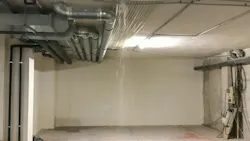
A pipe lets go on the fourth floor at 11 p.m. Nobody notices for an hour. By then the water has found the path every building gives it, down through the ceiling, along the structural deck, into the suite below and the one below that. A tenant calls the after-hours line. Now someone on your team has to make decisions, in the dark, with a wet building and no restorer on site yet.
What that person does over the next two days will matter more than almost anything that happens after.
I have spent six years responding to residential and commercial water losses, usually working next to the carrier and the adjuster, and the pattern barely changes. The final number is set early. Not by how bad the break was, but by how fast and how well the first response goes. A clean supply-line break that sits over a weekend can cost more than a worse event that someone handled in the first few hours.
Here is what the clock is doing, and how to stay in front of it.
Why Mold Starts Within 48 Hours of a Water Loss
Two numbers drive the urgency.
The first is mold. Give it moisture, organic material, and ordinary room temperature, and it can begin to grow in about 24 to 48 hours. Drywall, ceiling tile, carpet backing, the paper and dust inside a wall cavity, that is all the food it needs. Once it starts, you are not drying a building anymore. You are remediating one, and the cost and the complexity climb fast.
The second is the category of the water. Restorers sort water by how dirty it is. Category 1 is clean, from a sanitary source like a broken supply line. Category 2 carries real contamination. Category 3 is grossly contaminated, the sewage and ground-water end of the scale. The part that matters for a facility team is that category degrades with time. Clean water that sits, or runs through a dirty wall cavity, or simply warms up, does not stay clean. A Category 1 loss can read as Category 2 by morning, and that changes what can be dried and kept vs. what has to be cut out and hauled away.
A managed property adds a layer a single-family house never has. Tenants who need to keep operating. Common areas that belong to everyone and no one. A shared HVAC system that can take a local problem and move it through the whole building. A lease that says something about who owns which part of the mess. Every early decision touches all of it.
The First Response Steps That Limit Secondary Damage
Stop the water. Obvious, and still the step that gets fumbled at 11 p.m., because nobody on shift knows where the isolation valve for that riser is. If your engineers cannot find and close the right valve in a couple of minutes, fix that this week, not during the next flood.
Cut power to the affected areas if there is any chance water reached outlets, panels, or fixtures. Standing water and electricity is the one situation where waiting on an electrician is the right move and not the slow one.
Get the standing water out, and be careful what you tear into. Extraction is almost always safe and almost always helps. Demolition is neither. When a ceiling is sagging and the carpet squelches, the instinct is to start ripping material out right now. Sometimes that is correct. Sometimes you are about to disturb a floor tile from 1975 whose mastic holds asbestos, or open a cavity and turn a contained loss into an airborne one. In a building old enough to have those materials, know what you are cutting into before you cut.
Then comes the question that decides most of the job. Can this be dried, or does it have to come out? This is where a qualified restorer earns the call. Drying in place with air movers and dehumidifiers saves material and keeps the claim smaller, but it only works when the water is clean enough and you can actually bring the assembly down to a measured dry standard, not dry to the touch. Wet insulation in a wall, hardwood saturated over a slab, water tracked under vinyl—those hold moisture where no fan reaches. A good restorer reads the building with moisture meters and a thermo-hygrometer and builds the drying plan around numbers instead of appearances.
One more first-night call people miss is the building’s own air system. If the HVAC is running while an affected area holds any contamination, you may be quietly seeding it through every return in the zone. More on that in a moment. The short version is to think before you let a contaminated space breathe through the building’s ductwork.
The Indoor Air Quality and Mold Risks Facility Teams Underestimate
Most teams treat a water loss as a wet problem. It is also an air problem, and the air problem is the one that produces tenant complaints, sick-building worries, and the phone call you do not want three weeks later.
The HVAC system is the main culprit. An air handler serving a flooded zone pulls moisture, and if contamination is present, spores and bioaerosols, then delivers all of it to spaces that never got wet. A loss that should have stayed in two suites becomes a building-wide question because the equipment spread it. On a commercial job, containing the affected area and making a deliberate decision about the air handling is not optional.
“Dry to the touch” is the second trap. Surfaces dry first and fastest. The water that actually matters is in the cavity, under the flooring, behind the baseboard, wicked up the back side of the drywall. That hidden moisture is what feeds mold while the room looks finished. It is also why a real drying plan runs on meter readings taken over several days, not on how the carpet feels underfoot.
The musty smell belongs in this section too, because it is not only unpleasant. That odor is mostly microbial volatile organic compounds, the gases mold gives off as it grows. If a space smells musty, something is already active, and usually somewhere you cannot see it yet.
Contamination raises the stakes again. Category 2 and especially Category 3 water put pathogens and bioaerosols into the picture, and tearing out contaminated material without containment will throw them into the air. For anything past a small, clean loss, this is where an outside expert belongs. An industrial hygienist can test, write a containment and remediation protocol, and give independent clearance once the work is done. That clearance protects the tenants, and it protects you if someone asks later whether the building was actually made safe. On a large or contaminated job, it is worth far more than it costs.
How To Document a Water Loss for the Insurance Claim and Your Tenants
A water loss creates two records at once, the one the carrier will want and the one your tenants will hold you to. Start both in the first hour.
Pin down the cause of loss early and honestly, because coverage often turns on it. A sudden pipe burst and a slow leak that ran for months sit very differently in most policies, and the difference gets settled by evidence, not by argument. Photograph the source before anyone repairs it.
Then document the water the way a restorer does, which is the part facility teams usually keep too thin. Moisture mapping at the start. Daily readings as the drying runs, with the equipment and the psychrometric conditions written down. Photos at every stage. That record does two jobs. It shows the loss was real and the response was reasonable, which counts because the burden of proving the extent of a loss usually sits with the insured, not the carrier. And it shows the building was dried to standard, which is your defense if a mold complaint surfaces months later.
Keep a clean scope of what came out and why. When material has to go, the estimate and the photos should agree. Adjusters work in estimating platforms like Xactimate, and a documented, standards-based scope moves through that system with far less friction than a pile of receipts and a verbal story.
Do not skip the tenant record. Write down when each tenant was notified, what they were told, what access you needed, and when their space came back. In a managed property the loss is a business-interruption event for the people leasing from you, and a calm, dated communication log is what keeps a hard week from turning into a dispute. Tenants forgive the flood. What they remember is being left in the dark.
Build a Water Damage Response Plan Before You Need It
None of this holds together if the first 48 hours are improvised. The properties that come through a water loss well are the ones that settled the key questions in advance. Who can approve emergency mitigation after hours. Which restoration vendor gets the call, and how quickly they answer it. Where the isolation valves are. How tenants get notified, and by whom. Put that on a single page, make sure the after-hours team actually has it, and walk the building’s shutoffs once so finding them is muscle memory and not a search.
Across a portfolio, water losses are not rare. They are a scheduled surprise. The teams that treat them that way spend a fraction of what the improvisers spend, and they keep their tenants while they are at it.
About the Author
Nate Birch
Nate Birch is CEO of Apex Restoration, an IICRC-certified water damage restoration and mold remediation firm in Idaho and Eastern Washington, and has spent six years responding to residential and commercial property losses alongside carriers and adjusters.