Is your building fully compliant with the Americans with Disabilities Act? If not, you’re risking lawsuits and financial penalties that could range from thousands to tens of thousands of dollars.
Civil penalties assessed after the Department of Justice brings an enforcement action against you can reach up to $75,000 for a first violation. Some states—such as California—have also adopted laws designed to supplement ADA. These laws may have minimum fines for violations, making even a single, easily remedied violation potentially costly.
Four exhibitors at the 2026 IFMA World Workplace conference and expo shared solutions that can help businesses and buildings comply with the requirements.
1. Rampless, Pitless, and Towerless Wheelchair Lifts
Ascension Wheelchair Lifts demonstrated its retrofit-friendly vertical platform lift, which doesn’t need a ramp, a pit for the lifting mechanism, or a lifting tower. The small form factor and the lack of a ramp, pit, and tower make the lift ideal for existing facilities, including historic buildings and other spaces where the floor can’t be modified.
The lift isn’t only for wheelchairs, explained Sascha Schmitt, national sales manager. People with invisible disabilities can use the lift too—and there are more of them than you may realize.
“The disabled population is a lot larger than most people would even care to think, and people with invisible disabilities often utilize our transport—people with vertigo, or people with transitional disabilities like a hip replacement,” Schmitt said. “All people suffering from different types of disabilities are covered by the ADA and should be provided access into your facility.”
Maintaining an accessible facility not only protects you from lawsuits, Schmitt said, it can actually be a revenue driver. When people with disabilities know they can access your facility easily, word spreads quickly.
2. Easy Emergency Evacuation
If an emergency happens in your facility, how quickly can you get people with disabilities out the door? The Evac+Chair helps people with mobility issues get down to the ground floor quickly and safely if your elevators aren’t working. The company offers manual and powered models to fit the needs of different building types. Adam Walton, head of global training for Evac+Chair, advised facility managers who currently don’t have an evacuation plan to start with one or a few chairs and scale up as budgets permit.
“Some building managers will get scared off, because they’ll see a multi-story building with multiple exits and suddenly you need one on every floor at every exit,” Walton said. “If you don’t have anything [currently], you need to have something. Start somewhere and make progress to get to that point where you have the coverage.”
3. Adult Changing Tables
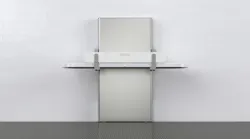
Changing solutions for adults aren’t required by the ADA, but they are required for some types of facilities by the International Building Code. ASI Group’s booth featured its new solution, a universal changing table with a 500-pound weight capacity that’s available in hardwired or plug-in versions. The table can rise from 16 to 39 inches to accommodate people with varying needs, including people who need to transfer from a wheelchair. “It’s about making sure everyone has a solution,” explained Joshua Griffing, national sales manager for ecommerce and house accounts.
The stainless steel and plastic surfaces are easy to clean, and the bed folds up to preserve space when the table is not in use, Griffing added.
4. Signage That Performs—And Looks Good
Clear wayfinding signage is crucial for people who are blind or have low vision. ADA spells out requirements for Braille alphabets, contrast, and more. Nova Polymers, a materials supplier for the sign industry, helped World Workplace attendees understand their signage obligations under ADA and compliant design options that use the company’s fabrication equipment.
“It’s imperative that [building owners or facilities teams] work with their architect or design firm to make sure that firm is making sure they’re in full compliance—not only with the federal and state signage requirements for ADA, but also the creative aspects of how they want these signs to look,” said Tim Lloyd, director of business.