Lithium-Ion Batteries: Risks, Response, and Recovery (IFMA 2026)
Key Highlights
- Buy certified batteries and devices, use the manufacturer-provided charger, and follow safe charging and storage practices.
- Inspect batteries for swelling, punctures, unusual heat, odors, hissing, or popping, and stop using damaged devices immediately.
- Inventory batteries, establish intake checks, and recycle old or damaged batteries through appropriate facilities—not regular trash.
- Plan for rapid evacuation, shifting wind conditions, toxic smoke, and safe cleanup of battery debris after a fire.
- Keep charging and battery storage areas away from exits, flammable materials, critical equipment, and flood-prone locations.


From cell phones to electric vehicles, lithium-ion batteries are everywhere in and around your facility. About 98% of rechargeable products contain this type of battery, according to Nicole Sanders-Abbott, research amplification manager for UL Research Institutes’ Fire Safety Research Institute. But if these batteries are damaged or poorly made, they can cause fires that rage hotter and faster than a conventional fire—and they’re very difficult to put out.
“One of the impacts it has is on the time you have to respond to that fire,” Sanders-Abbott explained. “Any fire that has a large lithium-ion battery-powered device, like an e-mobility device, a battery energy storage system, or electric vehicles around the building—any of that can make the time for people to get out of the building shrink down to less than one minute.”
This narrow escape window underscores the importance of safe battery management and best practices around electric vehicles, e-mobility devices, and any other item that uses a lithium-ion battery. Sanders-Abbott and Derrick A. Denis, senior vice president, environmental health and safety, industrial hygiene and the built environment for J.S. Held LLC, shared how good battery management can lessen your risks at IFMA’s 2026 World Workplace conference.
Take CHARGE of Lithium-Ion Batteries
Safer battery use starts with smarter management practices. Sanders-Abbott shared a six-step framework, CHARGE, developed by UL to help consumers and facility managers manage lithium-ion batteries effectively.
C: Choose Certified Products
Only buy products that are listed or safety certified by a nationally recognized testing laboratory, Sanders-Abbott advised. Many products sold online do not meet these critical safety standards. Unregulated scooters and bikes are especially concerning due to their size.
H: Handle with Care
Always use the charger that each device came with. Follow the manufacturer’s instructions and store batteries away from extreme temperatures, direct sunlight, exits, and anything flammable. Charge larger devices away from exit paths and don’t leave them on the chargers overnight.
A: Always Stay Alert for Warning Signs
Check battery-powered devices often for damage or abuse, such as swelling or punctures. These can indicate the possibility for an incident before you see other warning signs. Listen for unusual hissing or popping sounds and look for excessive heat or strange odors. If you notice any of these signs, stop using the device immediately. Smoke indicates there is an immediate fire danger.
“Appeal to your senses,” Sanders-Abbott said. “You’re going to see something, hear something, feel something. If you start to see puffs of smoke, if you start to hear hissing and popping sounds, if you feel the device is becoming overly hot, they’re talking to you and saying an incident is near.”
R: Recycle Batteries and Devices Properly
Responsibly dispose of old or damaged batteries by taking them to a battery recycling center. Never discard batteries, chargers, or battery-powered devices in a regular trash bin. UL is working with waste and recycling associations to better understand the financial challenges that come with disposal and how to offset them.
Lithium-ion batteries are around 95% recyclable, but recycling needs to be made easier and more convenient to ensure people actually do it, Denis added.
G: Get Out Quickly If There’s a Fire
Know the warning signs to look and listen for, and get out if you see or hear one, Sanders-Abbott advised. Follow your fire escape plan, leave immediately, and call 911.
E: Educate Others About Battery Safety
Start by educating yourself, then share what you’ve learned with others, Sanders-Abbott urged.
Emergency Preparedness with Lithium-Ion Batteries
Failure usually begins with risk factors that are manageable, Denis said, including:
- Manufacturing defects, counterfeit cells, and poor quality control
- Electrical issues, such as using the wrong charger, overcharging, short circuits, or damaged connections
- Physical damage from dropping, crushing, punctures, or impacts
- Environmental stressors, including heat, cold, cycling, and poor thermal management
- Exposure to water from flooding, fire suppression, or delayed instability
Failures are rare—but they do happen, Denis added. The consequences are so severe—from raging fires to the release of toxic gases and particulate—that it’s important for every facility professional to take battery safety seriously.
“You may be saying, ‘I don’t have lithium-ion batteries in my building.’ Your neighbor might,” Denis said. “A significant event is going to evacuate your building. The fire department is going to evacuate a quarter-mile or half-mile around the structure.”
Your emergency plans should account for two key issues that will emerge during a lithium-ion battery fire—the release of black mass (the interior contents of a battery) and your mustering point for building occupants. Black mass contains nickel, manganese, cobalt, and lithium, and you need to have a plan to clean it up after a fire. “You can’t put people back in the building if there’s nickel dust and manganese dust all over everything,” Denis explained. Work with your local fire department and water utility to ensure you have a cleanup plan that will keep the black mass out of storm drains and safely contain it.
The gases and particulates released during the fire also impact your choice of mustering points for evacuating building occupants. “Your mustering point may be in the wrong place, just because the wind is blowing smoke that way,” Denis said. “If everybody’s out of the building, they’re not going to burn to death, but now they’re standing in toxic smoke. Make sure you have some kind of contingency for where the wind is blowing.”
15 Best Practices for Lithium-Ion Battery Management
A fire is not a foregone conclusion—it’s just something to be prepared for. Denis offered 15 smart tips for managing your risks.
- Identify where the lithium-ion batteries are. “If you don’t have inventory management, you don’t know,” Denis said. “Lithium-ion batteries are everywhere, but if you don’t know where they are, you can’t make a plan.”
- Find ways to get the lithium-ion batteries from your business into recycling. “There are places that grind up whole cars. They can recycle a battery,” Denis said. “But it’s only going to happen if you get it to a recycler. If you throw them into the trash, what happens when the trash starts to compact? It starts a fire.”
- Practice safe charging. Don’t charge devices on top of something that retains heat, and don’t cover them. Don’t charge outside, and don’t leave devices on the charger for too long.
- Only use the charger that came with each device. “Just because you can put the plug in the device doesn’t mean it’s the right amperage or voltage,” Denis said. “Label the device and label the charger.”
- Write a born-on date. “What do you do when you change your air filter? You write the date it was installed and it starts a clock for when you’re going to take it out,” Denis said. “We need to do this with lithium-ion batteries. We’re going to inspect it or replace it.”
- Buy batteries from trusted vendors. Look for proven companies that are UL listed.
- Don’t put EV charging stations near anything important. It’s cheaper to locate your charging stations near your building because the electrical runs are shorter, but if there’s a fire, you’re going to have to evacuate. Don’t put the stations near anything that’s flammable or highly important, and build them with a plan to upgrade them periodically. “Most of the lithium-ion battery fires I go to are five or six generations old,” added Denis.
- Inspect devices and chargers periodically. Someone needs to check devices and chargers to make sure they’re in good condition and are safe for continued use.
- Build charging stations on high ground. Avoid damage from standing water by picking the smartest location for the stations to go.
- Relocate uninterrupted power supplies. UPS products need to go in a separate fire compartment away from your server, and these areas need to be separately ventilated because of the risk of toxic and flammable gas release during a fire.
- Find a place to store old batteries. “Don’t leave too many dangerous things in one spot,” Denis advised. “Make a separation between these devices. Don’t put too many things in one spot, because if you do, you’ve got to deal with them all at once.
- Avoid overpressure. Don’t store old batteries in containers that aren’t going to let the gas out. During a fire, they’ll explode.
- Have a good continuity of operations plan (COOP). Your COOP should account for battery fires both on and near your campus.
- Educate occupants. “People don’t know this, and they’re plugging in three or four e-bikes,” Denis said. “Your security office has 20 radios plugged in. That’s not good. We need to educate the public, because people who lease space in your building are going to burn your building down by plugging too many things into one outlet.” Don’t daisy-chain power strips either, Denis added.
- Establish an inspection at intake. Inspect any battery-powered device, charging system, and battery that people are bringing into your building or onto your campus. Look for potential issues like antiquated products (and consider establishing a maximum age for devices); structural damage (such as swollen, impacted, or otherwise suspicious characteristics); off-brands that don’t match your list of approved brands, makes, and models; and products that appear on a recall list.
“You have to have this on your radar,” Denis urged. “Everyone is woefully underprepared.”
About the Author
 Janelle Penny
Editor-in-Chief at BUILDINGS
Janelle Penny has been with BUILDINGS since 2010. She is a two-time FOLIO: Eddie award winner who aims to deliver practical, actionable content for building owners and facilities professionals.
Related
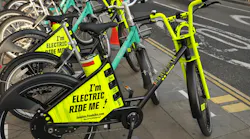 Electric bikes (e-bikes) are shown in London. Lithium-ion batteries used in e-bikes can cause fires if they’re damaged.