Why Modern Building Operations Require IoT-Driven CMMS Workflows
Key Highlights
- IoT sensors monitor conditions such as vibration, temperature, pressure, electrical current, and energy use to reveal potential equipment problems.
- Integrated CMMS platforms can convert abnormal readings into prioritized work orders with relevant fault details and sensor data.
- Condition monitoring supplements—not replaces—scheduled maintenance, required safety checks, and qualified technician expertise.
- Targeted maintenance can help teams focus limited labor on critical assets, plan repairs earlier, and reduce the risk of unplanned downtime.
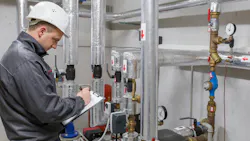
Integrating Internet of Things (IoT) infrastructure with a computerized maintenance management system (CMMS) helps building operators shift from fixed schedules to condition-based maintenance decisions. The change results in earlier fault detection and a more focused use of technician labor.
The Shift from Calendar-Based Maintenance to Predictive Action
Fixed maintenance schedules create consistency, but they can’t respond to every change in equipment health in real time. One asset may need attention days after an inspection, while another continues to operate normally through regular service intervals. Sensor-driven workflows give maintenance teams the information they need to distinguish these conditions.
The scale of connected technology supports wider adoption. Statista projects that the number of IoT devices worldwide will exceed 31 billion in 2030. For commercial buildings, connected sensors are a practical way of incorporating real-time equipment data into maintenance decisions.
The Traditional Calendar-Based CMMS Workflow
The conventional workflow follows a fixed sequence:
Asset Healthy → 30-Day Timer → Routine Work Order → Unnecessary Check → Wasted Labor
The CMMS generates a task when the scheduled interval expires, regardless of the asset’s current condition. Technicians may spend hours inspecting healthy equipment while emerging faults elsewhere go undetected between visits.
Preventive maintenance schedules are still necessary for manufacturer-recommended servicing and safety checks. However, operators gain better coverage when they supplement these schedules with condition monitoring that identifies developing issues between planned visits.
The IoT Sensor-Driven CMMS Workflow
A sensor-driven workflow follows a condition-based sequence:
Asset Micro-Fault → IoT Telemetry → Priority Work Order → Targeted Repair → Asset Saved
Sensors collect operating data and transmit it to monitoring software. When readings cross configured thresholds or indicate an abnormal pattern, an integrated CMMS can generate a work order, assign a priority, and notify the responsible team.
Technicians then investigate the specific condition and document the corrective action. The maintenance schedule continues to handle required servicing, while the equipment data helps teams respond to additional problems as they emerge.
How IoT Telemetry Catches Micro-Faults Before They Become Failures
Predictive maintenance depends on a reliable connection between physical measurements and maintenance tasks. Sensors must capture meaningful data, communication networks must transmit it, and software must interpret readings against each asset’s operating requirements.
Monitoring Equipment Conditions Through Sensors
Vibration, temperature, pressure, electrical current, and energy consumption can reveal different forms of equipment degradation. Changes in a motor’s vibration pattern may indicate bearing wear. Rising temperatures can highlight excessive friction or cooling problems, while pressure deviations may reveal restricted flow or control issues.
Transmitting Sensor Data Across IoT Networks
An IoT network connects sensors to gateways, processing systems and management applications. These devices use low-power communication methods like Zigbee, LoRaWAN, or NB-IoT. The choice depends on factors such as coverage, power requirements, network architecture, and the types of equipment being monitored.
Turning Telemetry into Prioritized Work Orders
Monitoring platforms evaluate incoming readings against configured thresholds or analytical models. A single threshold breach may trigger an alert, while recurring deviations can help identify developing issues and distinguish them from temporary fluctuations.
CMMS integration completes the workflow. A generated work order can include the fault details, relevant sensor readings and assigned priority. Depending on the system’s capabilities, it can also route the task to an appropriate technician and track its resolution.
Protecting High-Risk Legacy Assets with Automated Oversight
Older mechanical systems require particular attention because their failure can threaten occupant safety, damage property, and interrupt essential services. Commercial boilers and other legacy equipment may also offer limited built-in monitoring capabilities.
IoT monitoring provides additional visibility between manual inspections. However, safe operation still depends on qualified personnel and approved procedures.
What the CMMS Automates
An integrated CMMS can coordinate several maintenance activities. These include:
- Condition monitoring: Collect equipment readings and identify deviations from expected operating conditions.
- Work order generation: Create maintenance tasks when data indicates a potential issue.
- Priority and dispatch: Assign work according to asset criticality, fault severity, and technician responsibilities
- Documentation: Record alerts, inspections, repairs, and follow-ups for maintenance history and compliance records.
These functions help operators track equipment condition and teams’ responses to reported problems.
What Still Requires Hands-On Expertise
Commercial steam boilers illustrate the role of physical maintenance procedures. When water levels fall too low, exposed metal components can overheat, warp, or crack, creating serious equipment and safety risks.
A CMMS can schedule testing and document completed work. A qualified technician must still conduct the required inspection and testing procedures.
For example, automated work orders can schedule blowdown testing, where technicians check the boiler’s refill speed, verify low-water cutoff operation and identify blockages. These automated processes can also assign staff to perform the checks and document the process. However, the technician is still responsible for performing it and addressing any issues they identify.
Optimizing Skilled Labor in a Shrinking Workforce
Maintenance teams must manage complex building systems with limited staff. Unnecessary inspections consume hours that technicians could spend resolving faults or servicing critical equipment.
According to a 2026 report by TechForce Foundation, the U.S. has 241,842 annual technician job openings compared with 101,743 annual graduates. Supply only meets approximately 42% of demand.
By automating parts of the process, sensor-driven CMMS workflows help teams perform more efficiently and accomplish more with a potentially smaller group.
Reducing Unplanned Downtime Through Condition-Based Triggers
Early fault detection gives technicians time to plan repairs before equipment fails. Prioritized work orders help them address the assets with the greatest operational impact.
Maintenance records also reveal recurring faults, ineffective repairs, and equipment approaching the end of its useful life. Operators can use these insights to refine service intervals, plan spare-parts inventory, and guide replacement decisions.
IoT-CMMS integration reduces the risk of downtime when paired with reliable sensors and clear procedures. Proper documentation helps teams identify gaps and improve their performance.
What’s Next for Building Operators
An IoT-connected CMMS provides building operators with a structured way to translate equipment data into maintenance decisions. Combining condition-based alerts with scheduled servicing and qualified technical oversight helps protect critical assets, allocate skilled labor effectively, and support reliable building operations.
About the Author
 Emily Newton
Emily Newton is an industrial and tech journalist passionate about how technology is revolutionizing each sector. She has been writing and editing professionally for more than five years and is the editor-in-chief of Revolutionized.